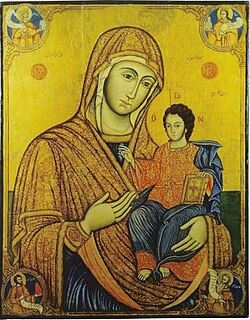
Why Jesus’ Real Humanity Matters
One of the quiet but dangerous errors that sometimes appears in Christian discussion is the idea that Jesus’ human body was already formed in heaven and then placed inside Mary’s womb. In this view, Mary contributed nothing to the humanity of Jesus. She merely carried him. She functioned as a container, a surrogate mother, an instrument of delivery.
At stake is not merely Mary’s role, but Jesus’ real humanity—the truth that the Son of God truly became one of us.
At first, this may sound like a way of protecting the sinlessness of Christ. People who teach this are often trying to avoid the idea that Jesus could have inherited a sinful nature from Mary. They assume that if Mary truly contributed to Jesus’ humanity, then Jesus must somehow be contaminated by human sin. So they imagine a different solution: God prepared a sinless human body elsewhere and implanted it into Mary.
But this solution creates a much greater problem than the one it tries to solve.
It does not merely protect Christ’s sinlessness. It weakens the incarnation.
The Word Became Flesh, Not Merely Placed in Flesh
The Christian faith does not confess that the Son of God merely entered a human body. It confesses that “the Word became flesh” (Jn. 1:14). That phrase is not decorative language. It is the heart of the gospel. The eternal Son truly became human. The eternal Son did not merely appear human, borrow humanity, or wear flesh like a garment. In Mary’s womb, by the Holy Spirit, he assumed our humanity from within the human family. As the early church insisted, the Savior had to become truly what we are in order to heal what we are.¹
That is why the New Testament speaks so carefully about his birth.
Paul says that God sent his Son, “born of woman” (Gal. 4:4). He says Jesus was “descended from David according to the flesh” (Rom. 1:3; cf. 2 Tim. 2:8). Hebrews says that since the children share in flesh and blood, Jesus “likewise shared in the same” (Heb. 2:14). It even says that he had to be made like his brothers and sisters “in every respect” (Heb. 2:17). Matthew and Luke also present Jesus not as a heavenly body dropped into history, but as the child born within Israel’s story, through Mary, in fulfillment of God’s promises (Matt. 1:1, 16, 20–23; Lk. 1:31–35; 2:6–7).
These texts do not describe a heavenly body inserted into Mary. They describe the Son entering our actual human story.
Mary was not a biological accident. Mary was neither a holy container nor God’s incubator. According to his humanity, Jesus was truly her son—the one through whom the eternal Son entered our human family. This does not mean Mary is the source of his divinity. She is not. The Son is eternally from the Father. But as to his human nature, Jesus is genuinely born of Mary. According to his humanity, Jesus is truly Mary’s son. He is Israel’s Messiah, David’s heir, Abraham’s offspring, and one of us.
Incarnation Is Not Implantation
This matters because the incarnation is not a divine visit. It is divine assumption.
God did not send the Son to hover above human life. God sent the Son to enter it. The Son did not redeem humanity by avoiding our flesh. He redeemed humanity by taking it to himself. The long, wounded story of Adam’s race became his story. Israel’s calling became his vocation. Mary’s womb became the place where the eternal Son truly assumed our flesh. Like every real child, he was born, nursed, carried, protected, raised, taught, and loved within a real family. (Lk. 2:40, 51–52; cf. Matt. 2:13–15).
That is why the “pre-made body” theory is so dangerous. It changes the meaning of Jesus’ birth. Instead of incarnation, we are left with something closer to implantation. Mary is reduced from mother to carrier, and the mystery of the Word becoming flesh is made to sound like artificial insemination or embryo transfer.
But the gospel says something deeper.
The Son did not merely pass through Mary. He was born of Mary.
Some may object, “But if Jesus took humanity from Mary, would he not inherit sin?”
That objection reveals the deeper confusion. It treats sin as though it were a physical contaminant, something passed through blood, tissue, or genetics like a disease. But Scripture speaks of sin not as a material substance but as rebellion, corruption, bondage, death, and the distortion of human vocation (Gen. 3:6–19; Rom. 5:12–21; 6:12–14; 7:17–24; Eph. 2:1–3). Sin is not a fluid in the bloodstream. It is a power that enslaves, a condition that disorders, a rebellion that alienates, and a death-bound existence that bends humanity away from God.²
This is why the virgin birth matters. The virgin birth does not mean Mary was irrelevant. It means Jesus’ conception was the work of the Holy Spirit. The humanity he received from Mary was not bypassed but sanctified. The angel does not tell Mary that a heavenly body will be placed inside her. He says, “You will conceive in your womb and bear a son” (Lk. 1:31). When Mary asks how this will happen, the answer is not implantation but divine overshadowing: “The Holy Spirit will come upon you, and the power of the Most High will overshadow you” (Lk. 1:35; cf. Matt. 1:20).
The virgin birth does not mean Jesus bypassed Mary’s humanity. It means the Holy Spirit brought about his conception in holiness so that the Son truly became human without sin.
In other words, Jesus is sinless not because he avoided our humanity, but because the Holy Spirit acted in a unique and holy way in his conception. He is truly human, yet without sin (Heb. 4:15; 1 Pet. 2:22; 1 Jn. 3:5).
That is a much stronger gospel.
What Is Not Assumed Is Not Healed
A Christ who avoids our humanity cannot heal it. A Christ who merely imports a heavenly body does not truly stand where we stand. But a Christ who takes our flesh, enters our weakness, bears our griefs, resists our temptations, dies our death, and rises bodily into new creation life—that Christ saves us from the inside (Isa. 53:4–6; Rom. 8:3–4; Heb. 2:14–18).
This is where the ancient Christian principle becomes important: what is not assumed is not healed. Gregory of Nazianzus used that logic against teachings that diminished Christ’s full humanity. If the Son does not truly assume what belongs to us, then what belongs to us is not truly healed in him.³
The point is simple but profound. Christ heals what he takes to himself. Christ heals what he takes to himself. Human nature is truly healed because the Son truly assumed it. Flesh and blood are redeemed because he fully shared them. Adam’s family is restored because Christ entered that family and remade it in himself.
The New Testament presents Jesus as the true human being, the last Adam, the faithful Israelite, the obedient Son. Paul says, “as by the one man’s disobedience the many were made sinners, so by the one man’s obedience the many will be made righteous” (Rom. 5:19; cf. 1 Cor. 15:21–22, 45–49). Notice the logic. Redemption comes through the obedience of a real man. Not a divine figure pretending to be human. Not a heavenly body dropped into history. A true human being, standing in Adam’s place, Israel’s place, and our place.⁴
This is also why Jesus’ Davidic descent matters. If his humanity did not really come through Mary, then in what sense is he David’s son according to the flesh? The Messiah is not merely someone who appears among Israel. The Messiah does not merely appear among Israel; he comes from within Israel’s own family line. Jesus is the promised seed, the son of David, and the son of Abraham—the one in whom Israel’s covenant story reaches its goal (Matt. 1:1; Lk. 1:32–33; Acts 13:22–23; Rom. 1:3; Gal. 3:16).
A pre-made heavenly humanity severs that line. It may still use the language of birth, but it empties that language of its biblical force.
The Danger of a Docetic Instinct
This teaching may not be classic docetism in the strictest sense. Classic docetism says Jesus only appeared to have a real human body. The “pre-made heavenly body” theory may still insist that Jesus had a real physical body.
But it moves in a docetic direction.
Why? Because it makes Jesus’ humanity something other than our humanity. It makes his flesh something imported rather than assumed. It treats ordinary human flesh as too dangerous, too contaminated, too unclean for the Son of God to receive from Mary. The New Testament resists precisely this kind of instinct when it insists that Jesus Christ has come “in the flesh” (1 Jn. 4:2–3; 2 Jn. 7). The issue is not merely that Jesus had a visible body. The issue is that the Son truly entered embodied human existence.⁵
But Christianity has always insisted on something more shocking and more beautiful.
The holy God did not despise human flesh.
The womb was not unclean to him. Ordinary human birth was not beneath him. Salvation did not come from a safe distance, but through the Son’s full entrance into our humanity.
The Son of God became what we are, so that in him we might become what God intended humanity to be (Rom. 8:29; 2 Cor. 5:17; Phil. 3:20–21; 1 Jn. 3:2).
This also protects us from a distorted view of Mary. We honor Mary best not by exaggerating her role, making her divine, or turning her into a co-redeemer, but by recognizing her real motherhood as the woman through whom the Word truly became flesh. But neither should we reduce her to a container. The church honors Mary precisely because God chose to bring the Messiah into the world through her real motherhood.
Elizabeth does not call her “the container of my Lord.” She says, “the mother of my Lord” (Lk. 1:43).
That phrase matters.
Mary’s motherhood does not threaten the glory of Christ. It witnesses to the reality of his incarnation. The one she bore is truly the Lord. And the Lord she bore is truly her son according to the flesh.
But What About the Objections?
Some will still object that if Jesus received his humanity from Mary, then he must have inherited sin. But this objection assumes that sin is a physical substance passed through human biology. Scripture speaks of sin more deeply than that. Sin reigns (Rom. 5:21). Sin enslaves (Rom. 6:6). Sin deceives and kills (Rom. 7:11). Death holds humanity in bondage through fear (Heb. 2:15). These are not biological fluids. They are powers, conditions, and distortions of creaturely life under rebellion and death. The virgin birth does not mean Jesus bypassed Mary’s humanity. It means the Holy Spirit brought about his conception in holiness, so that the Son truly became human without sin (Lk. 1:35; Heb. 4:15).⁶
Others may appeal to Hebrews 10:5: “A body you have prepared for me.” But Hebrews is not describing a human body manufactured in heaven and implanted into Mary. The point in Hebrews 10 is the obedient bodily life of the Son, who comes to do the Father’s will (Heb. 10:7–10; cf. Ps. 40:6–8 LXX). The same letter says Jesus shared our flesh and blood and was made like his brothers and sisters in every respect (Heb. 2:14, 17). So Hebrews does not support a heavenly substitute for Mary’s real motherhood. It actually presses against it.
Some may say that since Jesus came from heaven, his body must also have come from heaven. But that confuses the divine person of the Son with the human nature he assumes. The eternal Son comes from heaven (Jn. 3:13; 6:38). His divine identity is not created in Mary. But his human nature is assumed in time, from Mary, by the Holy Spirit (Matt. 1:20; Lk. 1:35; Gal. 4:4). The one who comes from above truly becomes one of us below.
Others may fear that affirming Mary’s real motherhood exalts her too much. But saying Jesus is truly born of Mary does not make Mary divine. It protects the truth that Jesus is truly human. Mary is not the source of his deity. She is not the origin of the eternal Son. But according to his humanity, she is truly his mother. This is why historic Christian theology could call Mary Theotokos, “God-bearer,” not to magnify Mary above Christ, but to confess that the one born from her is truly God the Son in the flesh.⁷
Some may argue that God could have created a human body for Jesus directly, just as he created Adam from the dust (Gen. 2:7). Of course God could do whatever he wills. But the question is not what God could have done in the abstract. The question is what Scripture says God did. Scripture does not say the Son came with a newly created heavenly humanity. It says he was born of woman, descended from David according to the flesh, and shared the flesh and blood of the children (Gal. 4:4; Rom. 1:3; Heb. 2:14).
The virgin birth does not cancel Mary’s motherhood. It establishes that Jesus’ birth is both fully human and uniquely divine in origin.
The Gospel Requires a Real Incarnation
This is the mystery at the center of Christmas, but it is also the foundation of Good Friday and Easter. The one who was laid in the manger is the one who was nailed to the cross. The one who took flesh from Mary is the one who gave that flesh for the life of the world (Jn. 6:51). The one who shared our flesh and blood is the one who destroyed death through death (Heb. 2:14). The one who entered human life through birth is the one who carried human life through death into resurrection (Rom. 6:9–10; 1 Cor. 15:20–23).
If Jesus’ humanity is not truly ours, then his death is not truly ours. If his death is not truly ours, then his resurrection is not truly the beginning of our future.
That is why this teaching is not a minor technical mistake. It touches the heart of the gospel.
The danger is not only that it sounds strange. The danger is that it changes the shape of salvation. It suggests that God saved humanity by avoiding the very humanity he came to redeem. It treats Mary’s human contribution as a threat rather than as the very means by which the Son entered our condition.
But the gospel does not say God avoided human nature because it was dirty.
The gospel says God took human nature in Christ in order to cleanse, heal, restore, and glorify it.
Jesus did not come with a manufactured humanity. He came in our humanity—not merely occupying a body, but becoming flesh; not merely using Mary, but being born of Mary; not merely resembling us, but sharing our flesh and blood.
And because he truly assumed our humanity, he truly heals it.
That is the good news.
The Son of God did not save humanity by standing outside the human story. He entered it fully, took it upon himself, and carried it through obedience, suffering, death, and resurrection. He came not as a heavenly stranger wearing human skin but as Emmanuel—God with us, God among us, and God one with us in our flesh, yet without sin (Matt. 1:23; Jn. 1:14; Heb. 2:17; 4:15).
A borrowed humanity cannot save us.
A manufactured humanity cannot heal us.
A merely inserted body cannot redeem Adam’s race.
But the Word made flesh can.
And he has.
The Son did not save humanity by avoiding it. He saved humanity by assuming it, healing it, and raising it in himself.
Footnotes
¹ Gregory of Nazianzus, Epistle 101, in which he argues that what Christ has not assumed has not been healed; see also J. N. D. Kelly, Early Christian Doctrines, rev. ed.
² Augustine’s privation account of evil is classically developed in Confessions and Enchiridion; for Paul’s language of Sin and Death as enslaving powers, see James D. G. Dunn, The Theology of Paul the Apostle.
³ Gregory of Nazianzus, Epistle 101; see also John Behr, The Nicene Faith, on the logic of incarnation and healing in pro-Nicene theology.
⁴ N. T. Wright, Paul and the Faithfulness of God, especially on Adam, Messiah, and the vocation of Israel fulfilled in Christ.
⁵ Irenaeus, Against Heresies, Book 3, strongly resists views that weaken the reality of Christ’s flesh and saving solidarity with humanity.
⁶ Thomas F. Torrance, Incarnation: The Person and Life of Christ, on Christ assuming fallen human existence without becoming sinful; compare Heb. 2:14–18 and Rom. 8:3.
⁷ Cyril of Alexandria’s defense of Theotokos at the time of the Nestorian controversy was fundamentally Christological: the point was not to exalt Mary independently, but to confess the unity of the person born from her. See John McGuckin, St. Cyril of Alexandria: The Christological Controversy.
Theotokos icon, Lebanon (14th century)
Source: Wikimedia Commons
License: Creative Commons Public Domain Mark 1.0
View image source
Leave a Reply