Theme Verse:
“Indeed, the kingdom of God is among you.” — Luke 17:21
Few sayings of Jesus have been spiritualized as easily as His statement in Luke 17:21: “The kingdom of God is within you.” Read in isolation, the verse can sound as though Jesus were telling people to look inside themselves and discover God’s kingdom somewhere in the depths of the human heart. It can easily support a highly individualistic Christianity in which the kingdom becomes an inward feeling, a private experience, or a spiritual reality hidden inside each believer.
But that is probably not what Jesus meant.
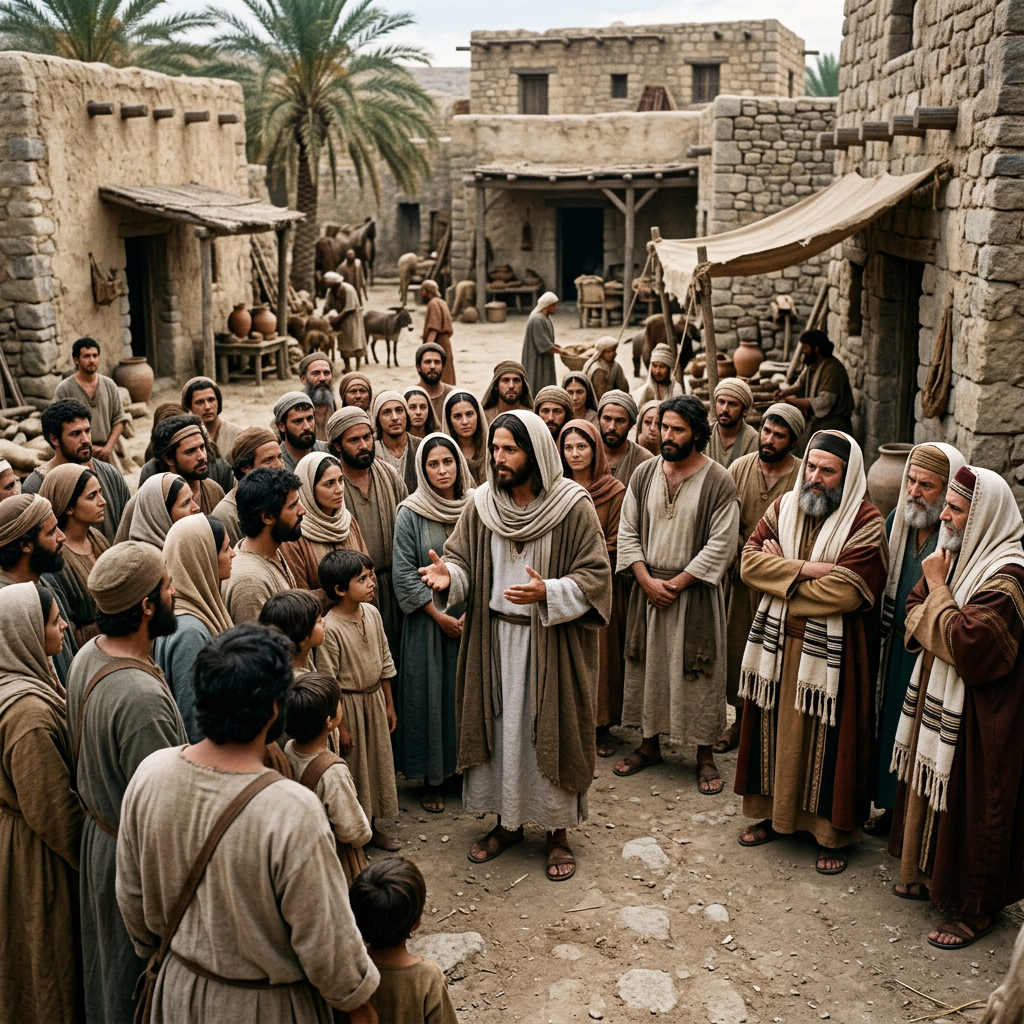
The context points us in a different direction. Jesus was speaking to Pharisees who had asked when the kingdom of God would come. His response was not an invitation to discover the kingdom inside themselves. Rather, Jesus was telling them that God’s kingdom was already present in their midst in a way they had failed to recognize.
The King was standing in front of them.
The kingdom of God is certainly capable of transforming the human heart, but in the Gospels it is much larger than something that happens inside us. The kingdom is God’s saving reign breaking into history through Jesus. It confronts evil, restores people, forgives sins, welcomes outsiders, defeats death, and begins the renewal of creation.
To reduce that kingdom to an inner spiritual experience is to make it far smaller than Jesus did.
The Pharisees Asked When the Kingdom Would Come
Luke gives us the setting clearly. The Pharisees asked Jesus “when the kingdom of God was coming” (Luke 17:20). Their question was understandable within Israel’s story.
Israel had long hoped that God would act decisively to establish His reign, defeat evil, restore His people, and put the world right. Israel’s Scriptures repeatedly looked toward a day when God would become King in a renewed and unmistakable way.
The kingdom was therefore not primarily a place where people went after death. Nor was it simply a private experience of God within the soul.
It was about God becoming King.
That does not mean Israel had only one expectation of how the kingdom would appear. Different Jewish groups imagined Israel’s restoration in different ways. Some anticipated political liberation. Others emphasized purification, divine judgment, or the restoration of proper worship. Yet the basic hope was that God would act decisively within history.
The Pharisees therefore wanted to know when that long-awaited kingdom would arrive.
Jesus answered in a way that challenged the assumptions behind their question.
The Kingdom Would Not Arrive the Way They Expected
Jesus said that the kingdom of God was not coming in such a way that people could simply say, “Look, here it is!” or “There it is!” Then comes the famous statement: “For, in fact, the kingdom of God is within you,” or, as many modern translations render it, “the kingdom of God is among you” or “in your midst.”
The Greek expression can carry more than one nuance, but the context strongly favors the idea of something present among them rather than a kingdom located inside each individual.
That makes good theological sense because Jesus was addressing Pharisees, some of whom opposed Him. It would be strange for Jesus to tell His critics that God’s kingdom already existed within their hearts while simultaneously confronting their failure to recognize what God was doing through Him.
His point is more striking.
They were asking when the kingdom would come, even though it was already confronting them in the person and ministry of Jesus.
They were looking for signs on the horizon while failing to recognize the One standing before them.
The Kingdom Was Present Because Jesus Was Present
Throughout the Gospels, Jesus speaks and acts as though the kingdom of God is arriving through His own ministry.
Mark summarizes Jesus’ preaching this way: “The time is fulfilled, and the kingdom of God has come near” (Mark 1:15). Jesus does not merely announce that the kingdom will arrive someday. He announces that God’s promised reign has drawn near.
His actions explain what He means.
When Jesus heals the sick, He demonstrates God’s restorative rule. When He casts out demons, He confronts powers opposed to God’s purposes. When He forgives sins, He exercises an authority associated with Israel’s God. When He welcomes sinners and outsiders, He begins forming the renewed people of God.
Matthew records Jesus saying, “If it is by the Spirit of God that I cast out demons, then the kingdom of God has come to you” (Matthew 12:28).
That statement is crucial.
Jesus does not say merely that the kingdom is coming soon. He says it has already arrived in some meaningful sense through His Spirit-empowered ministry.
The kingdom is present because the King is present.
The Kingdom Is God’s Reign, Not Merely a Place
Many Christians instinctively hear the word “kingdom” and imagine heaven. We speak about entering “God’s kingdom” after death, and Scripture certainly speaks of inheriting the kingdom. But the biblical idea is broader.
The kingdom of God refers fundamentally to God’s reign, rule, or kingship.
This helps explain why Jesus could announce that the kingdom had come near without claiming that the entire world had already reached its final state. God’s reign was breaking into history through Jesus even though evil, suffering, and death continued.
That is the tension at the heart of New Testament eschatology.
The kingdom has already arrived, but it has not yet arrived in its fullness.
Jesus already reigns, but Scripture still looks forward to the day when every enemy will finally fall beneath His authority.
God has already raised Jesus from the dead, but believers still await the resurrection of the dead.
The Spirit has already been given, but creation still groans for liberation.
The kingdom therefore belongs to the present and the future at the same time.
The Kingdom Is Already Here, but Not Yet Complete
This already-and-not-yet tension protects us from two opposite errors.
The first error pushes the kingdom almost entirely into the future. According to this approach, Jesus offered the kingdom, the world rejected it, and Christians now wait for God to establish it someday.
But the Gospels will not allow us to postpone the kingdom so completely. Jesus explicitly announces that God’s reign has drawn near. His works demonstrate its presence. His death confronts the powers of sin and evil, while His resurrection reveals that God’s new age has already begun.
The opposite error treats the kingdom as though it has already arrived in fullness. That can lead Christians to imagine that enough spiritual effort, political influence, cultural transformation, or social reform will create the final kingdom of God.
Scripture refuses that conclusion as well.
Christians do not manufacture the kingdom.
God establishes it.
Our obedience bears witness to God’s reign, but it does not produce the final new creation. We work for justice, practice reconciliation, care for the suffering, and proclaim the Gospel because Christ already reigns. Yet we still pray, “Your kingdom come,” because God’s victory has not reached its consummation.
We live between inauguration and completion.
Christianity Becomes Distorted When the Kingdom Becomes Merely Private
The translation “the kingdom of God is within you” has sometimes encouraged a deeply individualistic understanding of Christianity.
Faith then becomes almost entirely about what happens inside me.
Do I feel close to God? Have I accepted Jesus into my heart? Do I experience peace? Am I spiritually fulfilled?
These are not meaningless questions. God does transform individuals, and the Spirit certainly works within believers. Yet the Gospel refuses to remain confined to the interior life.
Jesus announced something public.
God was becoming King.
That announcement has implications for every area of human existence.
If Jesus is Lord, then our treatment of the poor matters. Our use of power matters. The way churches exercise authority matters. Our attitude toward enemies matters. Our economic behavior matters. Our truthfulness matters. Our politics matters. Our treatment of creation matters.
The kingdom cannot be reduced to private spirituality because the lordship of Christ cannot be restricted to a private compartment of life.
The Kingdom Challenges Every Competing Allegiance
The earliest Christian confession that “Jesus is Lord” carried implications far beyond personal devotion.
To confess Jesus as Lord meant that every other authority had become secondary.
Caesar could claim power, but Caesar was not Lord in the ultimate sense.
Political systems could demand allegiance, but they could not claim the devotion that belonged to Christ.
Religious institutions could exercise authority, but they remained accountable to Jesus.
The kingdom of God therefore always confronts competing kingdoms.
This does not mean the church becomes another political empire. Jesus explicitly rejects domination as the pattern for His people. His kingdom advances through truth, suffering love, witness, service, holiness, and the power of the Spirit rather than coercion.
The cross reveals the character of the King.
God’s kingdom does not conquer by becoming another version of Caesar’s kingdom. Jesus conquers by giving Himself for others.
That distinction remains vital whenever Christians become tempted to secure God’s purposes through political control or religious coercion.
The Kingdom Creates a New Kind of People
When God’s kingdom takes hold of people, it does transform them inwardly, but that inward transformation produces a visible way of life.
Jesus forms a community that embodies the values of God’s coming world.
Enemies are loved rather than hated.
Forgiveness interrupts cycles of retaliation.
The powerful learn to serve.
The excluded receive welcome.
Possessions become resources for generosity rather than merely instruments of self-protection.
Truthfulness replaces manipulation.
Mercy triumphs over self-righteousness.
These practices do not earn entrance into God’s kingdom. They reveal what life looks like under God’s reign.
Christian ethics therefore flows from kingdom identity.
We do not live this way to persuade God to become King. We live this way because in Jesus, God has already become King.
Stop Looking for the Kingdom in the Wrong Places
The Pharisees asked when the kingdom would come. Their problem was not that they cared too much about the kingdom. Their problem was that they failed to recognize the form in which it had arrived.
That danger remains.
We may look for God’s kingdom primarily in spectacular signs, political victories, prophetic timetables, powerful institutions, or dramatic religious experiences.
Meanwhile, the kingdom may appear where Jesus taught us to expect it.
It appears wherever the Gospel announces Jesus as Lord.
It becomes visible when sinners receive forgiveness, enemies reconcile, the weak receive protection, truth defeats deception, and believers serve rather than dominate.
It appears wherever the Spirit forms communities whose lives anticipate the world God has promised.
None of these things represents the kingdom in its fullness. Christians must never confuse our imperfect obedience with God’s final renewal of all things.
Yet these are signs.
They point beyond themselves toward the day when God will complete what He began in Jesus.
The Kingdom Is Bigger Than What Happens Inside You
Luke 17:21 should therefore not lead us toward a spirituality that turns inward and stays there.
Jesus was announcing something far more disruptive.
God’s kingdom had arrived among them because Jesus Himself stood among them.
The Pharisees were waiting for God to act while God’s Messiah was already acting before their eyes.
That same truth reshapes Christian faith today.
The Gospel is not merely the announcement that God can change our hearts, although He certainly does. It is the announcement that through the crucified and risen Jesus, God has begun reclaiming His world.
The kingdom transforms individuals, but it does not stop with them.
It creates a people.
It challenges rival allegiances.
It confronts evil.
It produces forgiveness and reconciliation.
It announces judgment against everything that destroys God’s creation.
It anticipates resurrection and new creation.
Christian hope therefore reaches far beyond the private heart.
Jesus did not come merely to establish a spiritual kingdom inside us. He came announcing that Israel’s God was becoming King, and through His death and resurrection that kingdom entered history decisively.
The kingdom is already among us wherever Christ rules through His Spirit and forms people who live under His lordship.
Yet we still pray for its completion.
“Your kingdom come.”
That prayer makes sense precisely because the kingdom has already begun.
We have seen its King.
We know His character.
We have tasted the powers of the coming age.
And because Jesus has risen, we know where the story is going.
God will finish what He has begun.
Frequently Asked Questions
Did Jesus really say the kingdom of God is “within you”?
Some translations render Luke 17:21 as “within you,” while others use “among you” or “in your midst.” Because Jesus was addressing Pharisees who were questioning Him, the context strongly favors the idea that God’s kingdom was already present among them through Jesus Himself.
What does the kingdom of God mean?
The kingdom of God primarily refers to God’s reign or kingship rather than simply a place called heaven. Jesus announced that God’s saving rule had entered history through His own ministry, death, resurrection, and the work of the Spirit.
Has the kingdom of God already arrived?
Yes, but not in its fullness. Jesus inaugurated God’s kingdom through His ministry, death, and resurrection. Christians nevertheless continue to await the final defeat of death, the resurrection of the dead, and the renewal of creation.
Is the kingdom of God only spiritual?
No. The kingdom certainly transforms people inwardly, but God’s reign affects the whole of life. It shapes relationships, ethics, justice, forgiveness, use of power, community, and ultimately God’s plan to renew creation.
Can Christians build the kingdom of God?
Christians bear witness to God’s kingdom, but they do not manufacture its final fulfillment. God establishes His kingdom. Believers live under Christ’s reign now and embody its values while awaiting the day when God completes His work.
For Further Study
- Bock, Darrell L. Luke 9:51–24:53. Baker Exegetical Commentary on the New Testament. Grand Rapids, MI: Baker Academic, 1996.
- Green, Joel B. The Gospel of Luke. New International Commentary on the New Testament. Grand Rapids, MI: Eerdmans, 1997.
- McKnight, Scot. Kingdom Conspiracy: Returning to the Radical Mission of the Local Church. Grand Rapids, MI: Brazos Press, 2014.
- Nolland, John. Luke 9:21–18:34. Word Biblical Commentary 35B. Dallas: Word Books, 1993.
- Wright, N. T. Jesus and the Victory of God. Christian Origins and the Question of God 2. Minneapolis: Fortress Press, 1996.
- Wright, N. T. How God Became King: The Forgotten Story of the Gospels. New York: HarperOne, 2012.
Leave a Reply