Who Really Deserves Recognition in the Church?
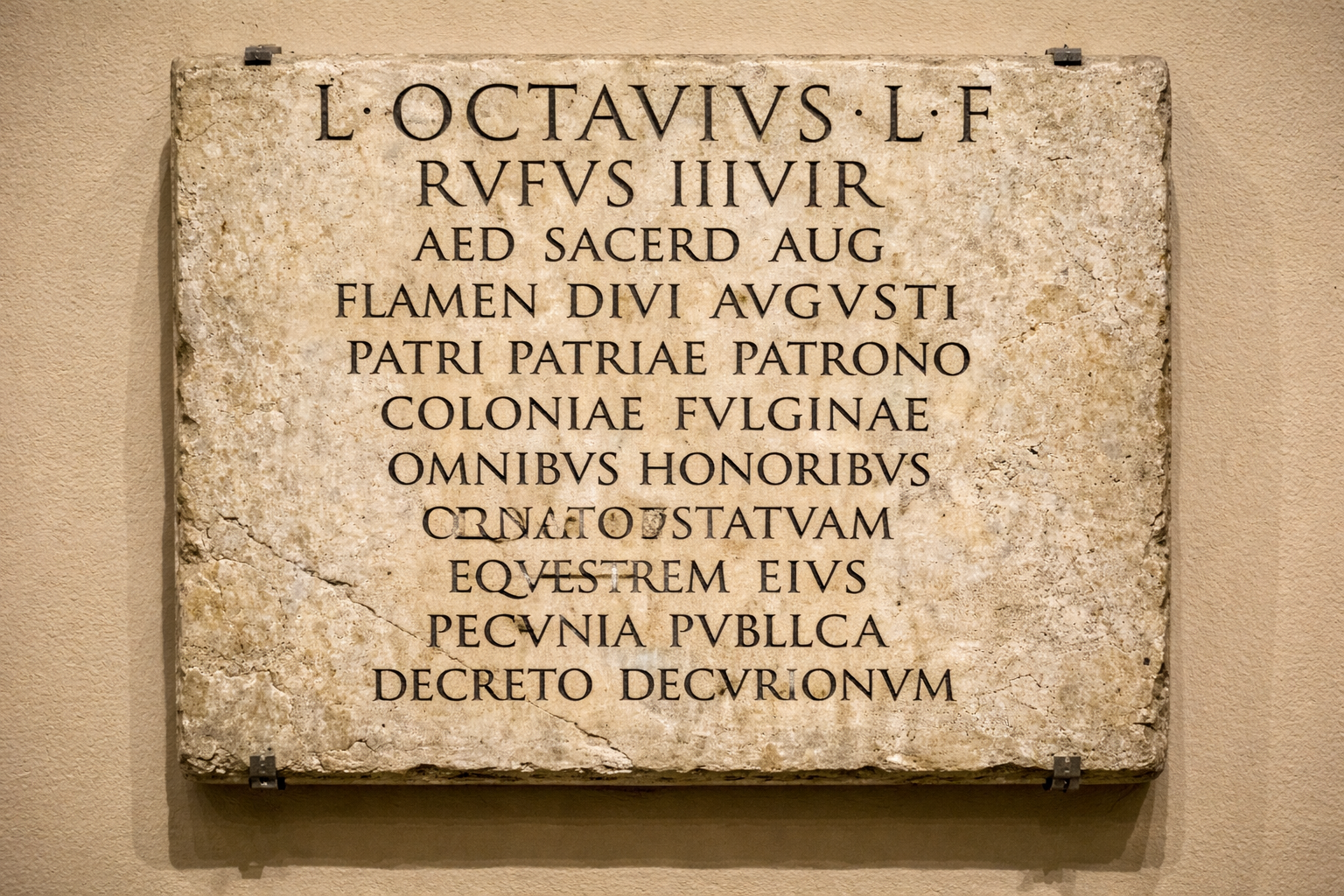
Honor in Philippi was not a soft, sentimental idea. It was how society was structured. As a Roman colony, Philippi lived by Rome’s values: honor belonged to people with rank, money, military records, and strong public voices¹. To be honored was to be visible, important, recognized. Into that world Paul writes something quietly explosive: “Honor such people” (Phil 2:29). And the people he tells them to honor are not the obvious candidates.
Paul does not point to a rich patron, a powerful speaker, or a famous church leader. He points to Timothy and Epaphroditus. Timothy, he says, is unique because he shows “genuine concern” for the Philippians’ welfare (Phil 2:20). Epaphroditus, he explains, “came near to death for the work of Christ” (Phil 2:30). Neither of these descriptions sounds like Roman greatness. Neither would impress a culture trained to admire power and success. But both look exactly like the pattern Paul has just described in the Christ hymn (Phil 2:5–11).
That hymn has already overturned the usual map of glory. Christ, who was “in the form of God,” did not clutch his status or exploit it (Phil 2:6). He emptied himself, took the form of a servant, and obeyed to the point of a shameful death on a cross (Phil 2:7–8). Only then did God exalt him and give him the name above every name (Phil 2:9–11). The order is crucial: self-giving first, vindication second. If that is what true lordship looks like, then the way the church thinks about honor must change as well (cf. Mark 10:42–45).
Seen in that light, Paul’s command “Honor such people” is not a casual compliment. It is an application of the hymn. Timothy is honored because his life enacts Philippians 2:4—he does not look out for his own interests, but for those of others (Phil 2:4, 20–21). Paul even says, “I have no one like him.” The reason is not that Timothy is the most gifted or the most impressive, but that his concern is real, unselfish, and centered on the good of the church. Epaphroditus is honored because he lives out the obedience of Christ in costly service. He comes close to death in the work, “risking his life to complete what was lacking” in the Philippians’ ministry to Paul (Phil 2:30). His weakness and illness might have been a cause of embarrassment in a Roman honor system. Paul will not allow that. He insists the church receive him “with all joy” and honor him precisely because he has suffered for the work of Christ (Phil 2:29–30).
Paul has to command this because communities, including Christian ones, naturally drift back toward the old honor codes. We are drawn to visibility. We admire influence. We measure worth by reach. And very often, the church today also tends to honor those who give much in the offering plate—the big donors, the funders of projects, the people whose names end up on walls and buildings. Generosity itself is good and biblical (2 Cor 8:1–5; 1 Tim 6:17–19), but when financial power quietly sets the honor map, we are not far from the dynamic James warns about—giving the best seat to the wealthy and sidelining the less impressive (Jas 2:1–4). If we start honoring mainly the impressive, the wealthy, and the successful, we will quietly betray the very hymn we have just confessed.
The Christ hymn is not meant to float above church life as a beautiful piece of theology. It is meant to give shape to the community’s instincts—especially around status, greatness, money, and recognition. That is why this passage speaks so directly into our own situation. Many churches today operate with honor maps that look far more Roman than cruciform. We celebrate those who draw crowds, speak well, build platforms, fund expansions, and accumulate followers. We assume that visibility and financial capacity equal value. We equate influence with faithfulness. Meanwhile, those who carry unseen burdens, serve in quiet roles, or take real risks for Christ’s work are often overlooked or quickly forgotten. Yet Paul calls the Philippians to “do nothing from selfish ambition or conceit” and instead to “in humility count others more significant than yourselves” (Phil 2:3). Philippians 2 presses a hard question: whom do we instinctively honor?
If we take Paul seriously, we will start looking for different signs of greatness. We will learn to honor those whose concern for others costs them time, energy, and comfort (Phil 2:17–18). We will honor those who travel, serve, or give in ways that involve genuine risk or loss, whether or not their names are known. We will honor people who have “proved worth” not by self-promotion but by long, steady obedience (Phil 2:22). We will still give thanks for visible gifts, strong leadership, and generous giving, but we will refuse to confuse prominence with faithfulness, platform with maturity, or wealth with spiritual weight (cf. 1 Cor 1:26–29).
This does not mean the church despises leadership, excellence, or generous giving. Paul is himself a strong leader, and he commends the Philippians for their partnership in the gospel from the first day until now (Phil 1:5). But leadership, in this framework, is measured by how deeply it participates in Christ’s pattern. Does it empty itself for the sake of others? Does it accept weakness and risk in service? Does it move toward costly situations rather than away from them? Does generosity come with genuine humility, or is it leveraged for influence (cf. Matt 6:1–4)? Those are the questions that matter if the cross is the measure.
“Honor such people” is a small line, but it carries great weight. It is one of the ways Paul protects the moral force of the gospel he preaches. If honor in the church follows the same lines as honor in the empire—or as honor in donor-driven, platform-driven culture—then the confession “Jesus Christ is Lord” (Phil 2:11) becomes hollow. If, however, honor is attached to service, to risk, to genuine concern, to quiet endurance, and to generous giving that does not seek control, then the church’s honor system begins to mirror the story of the one who emptied himself and was exalted by God (Phil 2:6–9).
In the end, Philippians 2:19–30 shows that the Christ hymn is not just something the church sings; it is something the church lives. Timothy and Epaphroditus are living commentaries on the hymn. The community is called to recognize that—and to align its instincts accordingly. The question is not just whether we can explain the hymn, but whether we are prepared to honor the kinds of people, including the quiet servants and the uncelebrated givers, who actually look like it.
Suggested Citation
Palon, Lorenzo F., Jr. “When the Church Honors the Wrong People” https://lorenzopalon.org/2026/02/16/when-the-church-honors-the-wrong-people/
Footnote
- ¹ Joseph H. Hellerman, Reconstructing Honor in Roman Philippi: Carmen Christi as Cursus Pudorum, SNTSMS 132 (Cambridge: Cambridge University Press, 2005), esp. 64–109.
Leave a Reply