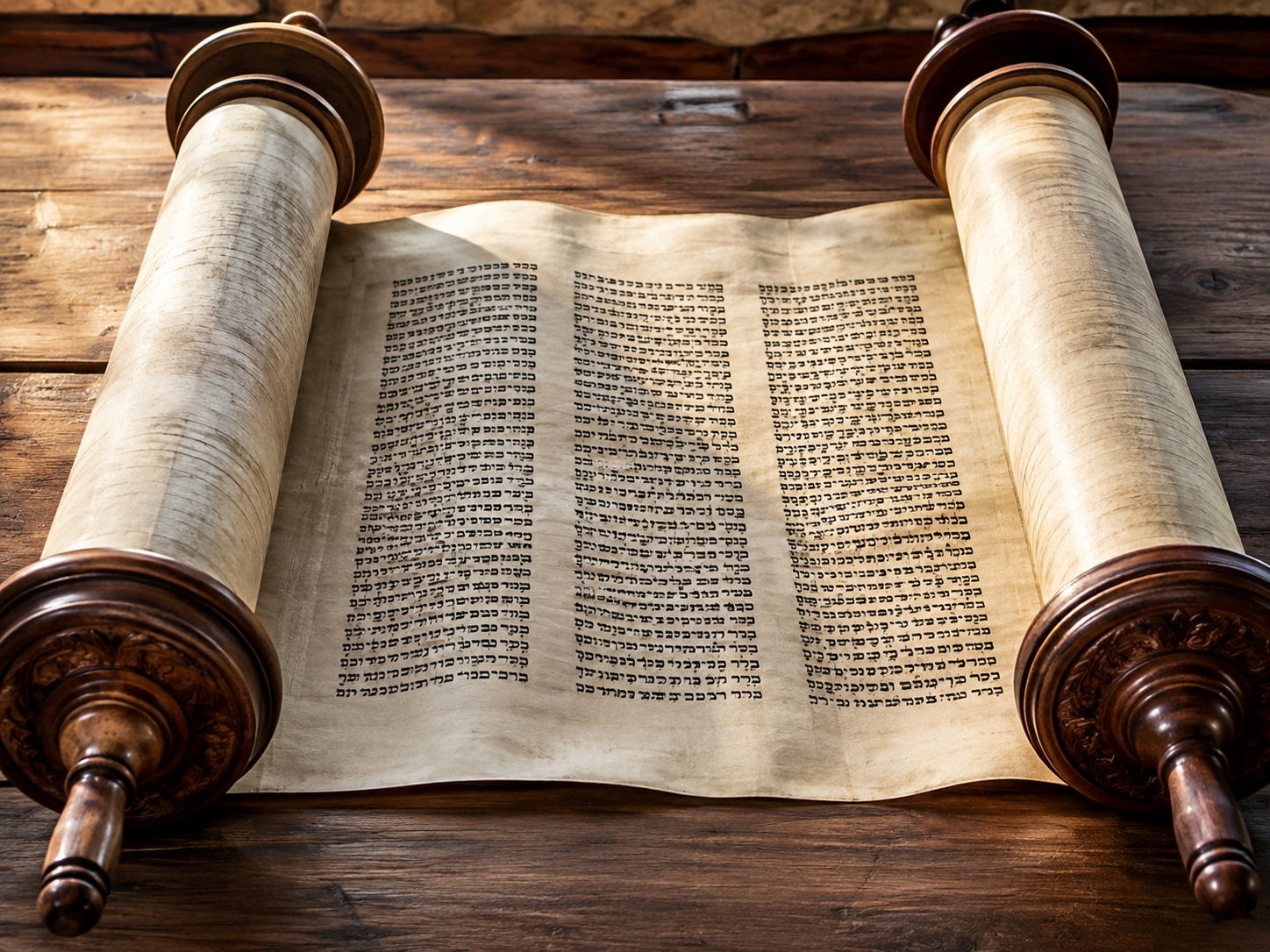
“So the law was our guardian until Christ came that we might be justified by faith. Now that this faith has come, we are no longer under a guardian.”
The purpose of the Law in Galatians is often misunderstood because Christians sometimes tell the biblical story as though God changed His mind halfway through. According to this version, God first gave Israel the Law and expected people to become righteous by obeying it. Israel failed, and God discovered that the system did not work; so He abandoned the Law and introduced a completely different system called grace through Jesus Christ. The Old Testament consequently becomes the story of God’s unsuccessful first plan, while the New Testament becomes His improved replacement.
That may be a familiar Christian explanation, but it is not the story Paul tells. In Galatians, Paul does not describe Torah as God’s failed attempt to save people through good behavior. He presents the Law as something God intentionally gave for a particular purpose within a much larger covenant story, a story that began before Sinai and was always moving toward its fulfillment in the Messiah.
Grace Came Before the Law
Paul’s argument in Galatians begins not with Moses but with Abraham. God had already promised to bless all the nations through Abraham, and Paul insists that the Law, which came centuries later, could not cancel that earlier promise. “The law, introduced 430 years later, does not set aside the covenant previously established by God” (Galatians 3:17).
That sequence matters because it tells us something fundamental about the biblical story. Promise came before Law, just as grace came before commandment. God’s purpose was never based upon Israel successfully earning His favor through Torah observance.
The Exodus tells the same story. Israel did not keep the Ten Commandments so that God would rescue them from Egypt; God rescued them first and then brought them to Sinai. Before saying, “You shall have no other gods before me,” God declared, “I am the LORD your God, who brought you out of Egypt, out of the land of slavery” (Exodus 20:2–3).
Redemption therefore preceded commandment. Torah instructed a people whom God had already rescued concerning how they were to live as His covenant people. This does not mean Israel’s obedience was unimportant, but it does mean that God had already been acting in grace long before the New Testament and did not introduce grace only after the Law failed.
Why, Then, Was the Law Given?
Paul asks precisely that question in Galatians 3:19: “Why, then, was the law given at all?” His answer is revealing because he does not say that God gave the Law as an experiment to discover whether human beings could save themselves. Instead, he says that it “was added because of transgressions until the Seed to whom the promise referred had come.”
The word “until” is crucial. Torah had a purpose, but it also had a horizon. It belonged to a particular stage of the covenant story between the promise to Abraham and the arrival of Israel’s Messiah.
This means Paul’s argument is fundamentally eschatological. God’s story moves from promise, through Israel and Torah, toward Messiah, Spirit, resurrection, and ultimately new creation. The arrival of Christ does not mean God discarded a plan that had gone wrong; it means the story reached the stage toward which it had always been moving.
This narrative also explains why Paul can describe the Law in apparently contrasting ways. In Romans 7 he says that “the law is holy, and the commandment is holy, righteous and good,” while in Galatians he insists that the Law could not give life. Those statements contradict each other only if we assume that something good must therefore be capable of accomplishing everything God intends.
A medical diagnosis can correctly identify what is wrong without possessing the power to heal the patient. In something like the same way, Torah could reveal God’s righteousness, expose human sin, shape Israel’s covenant life, restrain transgression, and point toward God’s promised redemption without possessing within itself the power to create the new humanity God ultimately intended.
The Law could command righteousness, but fallen humanity needed more than commands. What humanity ultimately needed was the transforming life of the age to come.
The Law Was a Guardian, Not the Destination
Paul describes the Law as a guardian until Christ came. In the ancient world, a guardian supervised a child until maturity and served a genuine and necessary role for a limited period. Paul uses this image to place Torah within the unfolding history of God’s covenant purposes.
The problem, therefore, was not the guardian itself but treating the guardian as though it were the destination. Once Messiah had come and the promised age had begun, insisting that Gentiles must enter the people of God through circumcision and Torah observance was, in Paul’s eyes, an attempt to turn the clock of redemptive history backward.
This explains the intensity of Galatians. Paul was not merely arguing against excessively religious people. He was defending the significance of what God had already accomplished through Christ.
The Messiah had come, God had given the Spirit, and God was now forming Abraham’s promised family from Jews and Gentiles through allegiance to Jesus Christ.. To insist that Gentiles must first become Jews to belong fully to this family was to misunderstand where the world now stood in God’s story.
Paul captures the moment beautifully in Galatians 4:4: “When the set time had fully come, God sent his Son.” The language is not that of a divine emergency plan but of an appointed moment finally arriving.
Christ Is the Goal of the Law
This also helps us understand Paul’s statement in Romans 10:4 that Christ is the telos of the Law. The Greek word can carry the sense of an ending, but it can also mean “goal,” “culmination,” or “intended destination.” Paul is not simply saying that Jesus threw Torah into history’s rubbish bin; he is announcing that the story to which Torah belonged has reached its climax in Israel’s Messiah.
Christ therefore does not represent God’s alternative to a failed Torah. He is the One toward whom the covenant story was moving.
The sacrificial system anticipated the problem of sin and reconciliation that reaches its decisive answer in Christ’s self-giving death. Israel’s vocation finds its faithful embodiment in the Messiah. The prophetic hope for transformed hearts becomes reality through the gift of the Spirit, while the promise to Abraham begins expanding among the nations as Jews and Gentiles are brought together in one Messiah-shaped family.
Reading the Law this way also protects Christians from treating the Old Testament merely as an obsolete religious system. Torah remains Christian Scripture because it continues to tell the story that leads to Jesus and helps us understand who He is. We do not understand the Messiah by discarding Israel’s Scriptures; we understand those Scriptures more fully by seeing where their story has gone in Him.
Grace Does Not Mean God Stopped Caring About Holiness
One of the strangest distortions of Paul is the idea that the Old Testament was concerned with obedience, while the New Testament replaced that obedience with grace. Paul would have found that contrast incomprehensible. The apostle who fought vigorously against requiring Gentile circumcision could also say that “the entire law is fulfilled in keeping this one command: ‘Love your neighbor as yourself’” (Galatians 5:14).
Paul, therefore, does not move from Law to moral indifference. He moves from Torah as the covenantal guardian of Israel to life in the Messiah empowered by the Spirit.
This is precisely why Galatians 5 immediately turns toward the Christian life. Paul tells believers to “walk by the Spirit,” because the freedom Christ gives is not freedom to become whatever our desires dictate. It is freedom from the enslaving powers of the old age so that a genuinely human life shaped by self-giving love can begin to emerge.
The prophets themselves anticipated this development. Jeremiah promised a new covenant in which God would write His instruction upon human hearts, while Ezekiel spoke of God giving His people a new heart and putting His Spirit within them. The biblical solution to human rebellion was never simply to provide a better list of rules; the human heart itself needed transformation.
Paul believes that this promised future has begun through Jesus. What the Law could not accomplish because of human weakness, Romans 8 says, God accomplished through His Son so that “the righteous requirement of the law might be fully met in us, who do not live according to the flesh but according to the Spirit.”
The problem, therefore, was not that Torah was evil. The problem was that Torah encountered humanity in bondage to sin.
The Law Exposes a Deeper Human Problem
At this point, the traditional Protestant reading of Paul preserves an important truth that should not be lost. Paul is not only concerned with Jewish-Gentile boundary markers such as circumcision, food practices, and calendar observance. Romans 1–3 reaches deeper and declares both Jew and Gentile under the power of sin.
Human beings cannot place God in their debt through obedience. Religious pedigree and moral achievement do not give anyone grounds to boast before Him. The cross destroys the illusion that some human group possesses an independent claim to righteousness.
Yet the opposite insight must also be retained. Paul is not simply attacking Judaism as though Jews believed they could purchase heaven with good works. His argument takes place within Israel’s covenant story, and the controversy in Galatians concerns who belongs to Abraham’s family now that the Messiah has come.
Both truths belong together. Sin destroys human boasting, while Christ destroys the barriers by which people turn religious privilege into superiority over others.
From Torah to Messiah, From Flesh to Spirit
Paul’s story therefore does not move from legalism to grace as though God once favored one and later discovered the other. Nor does it move from morality to lawlessness. It moves from promise toward fulfillment, from Torah toward Messiah, from flesh toward Spirit, and from the old age toward the beginning of God’s new creation.
This is inaugurated eschatology at the heart of Paul’s theology. The resurrection of Jesus means that God’s future has already broken into the present, although the old creation has not yet disappeared. The Holy Spirit is the firstfruits of the coming renewal, forming communities that are meant to embody ahead of time what God intends ultimately to do with His world.
Christian obedience makes sense within that story. We do not obey in order to persuade God to make us His people; we pursue holiness because in Christ God has already claimed us as His people and given us His Spirit.
Grace therefore does not abolish God’s moral purpose. Grace accomplishes what commandments alone could never produce by incorporating us into Christ and transforming us through the Spirit.
That distinction matters enormously. If we imagine grace means God no longer cares how Christians live, we have misunderstood Paul just as seriously as those who imagine salvation can be earned through religious performance. The Christ who justifies us is also the Christ into whose life we are incorporated, while the Spirit who assures us that we belong to God is the same Spirit who produces love, joy, peace, patience, kindness, goodness, faithfulness, gentleness, and self-control.
We Must Not Turn the Clock Backward
Two opposite mistakes become possible when Christians lose sight of Paul’s larger story. The first treats Torah contemptuously, as though the Old Testament recorded an inferior religion that Christianity thankfully replaced. Such a reading risks forgetting that Israel’s God is the God revealed in Jesus Christ and that the gospel itself only makes sense as the fulfillment of Israel’s Scriptures.
The second mistake pulls Torah out of its covenantal setting and places Christians back under the Mosaic arrangement as though the coming of the Messiah had changed nothing. Paul resists this interpretation too because believers now belong to the new-covenant people defined by Christ and empowered by the Spirit.
Christians therefore read the Torah through Christ. Its story reaches its climax in Him, its moral purpose finds its deepest expression in love, and its prophetic hopes begin to become reality through the Spirit. The worldwide family promised to Abraham is being gathered around Israel’s Messiah, not around the ethnic boundary markers that once distinguished Israel from the nations.
The Law was not God’s failed experiment because God was never experimenting. He did not try legalism, discover that it did not work, and eventually invent grace.
Grace was present from the beginning. Promise came before Sinai, redemption came before commandment, the Torah fulfilled its appointed role, and when the fullness of time arrived, God sent His Son.
The Messiah did not appear because God’s plan had failed. He appeared because God’s plan was reaching its appointed goal, and through His death, resurrection, and the gift of the Spirit, the age to come has already begun breaking into the present.
The great question of Galatians is therefore not whether the Law was good or bad. The more profound question is whether we recognize where we now stand in God’s story: Christ has come, the Spirit has been poured out, the nations are being welcomed into Abraham’s family, and God’s new creation has begun.
To go back as though none of these events had happened would not honor the Law. It would misunderstand the very story the Law was helping to tell.
Frequently Asked Questions
Was the Mosaic Law God’s failed attempt to save Israel?
No. Paul presents the Law as serving a genuine purpose within God’s covenant story. It governed Israel during a particular stage of redemptive history and pointed forward to the coming of the Messiah.
Could the Law give eternal life?
Paul says that the Law could not impart life because the deeper problem was humanity’s bondage to sin. The Law could reveal and command righteousness, but the transforming life of the new age comes through Christ and the Holy Spirit.
Does Christ simply abolish the Law?
Paul’s language is richer than simple abolition. Christ is the goal or culmination toward which the covenant story was moving. Christians therefore read Torah through the Messiah in whom its story reaches its climax.
Are Christians under the Mosaic covenant?
Christians are not placed back under the Mosaic covenant as though Christ had not come. They belong to the new-covenant people formed around Christ and empowered by the Spirit, while the Old Testament remains Christian Scripture and continues to reveal God’s purposes.
If Christians are not under Torah, does grace make obedience unnecessary?
No. Paul moves not from Law to lawlessness but from life under the old age to Spirit-empowered life in the new. Grace does not abolish God’s moral purpose; through Christ and the Spirit, grace begins producing the transformed life that commandments alone could never create.
For Further Reading
- Dunn, James D. G. The Theology of Paul the Apostle. Grand Rapids, MI: William B. Eerdmans Publishing Company, 1998.
- Gorman, Michael J. Becoming the Gospel: Paul, Participation, and Mission. Grand Rapids, MI: William B. Eerdmans Publishing Company, 2015.
- Hays, Richard B. Echoes of Scripture in the Letters of Paul. New Haven, CT: Yale University Press, 1989.
- McKnight, Scot. Galatians. NIV Application Commentary. Grand Rapids, MI: Zondervan, 1995.
- Thielman, Frank. Paul and the Law: A Contextual Approach. Downers Grove, IL: InterVarsity Press, 1994.
- Wright, N. T. Paul and the Faithfulness of God. 2 vols. Christian Origins and the Question of God 4. Minneapolis: Fortress Press, 2013.
Leave a Reply