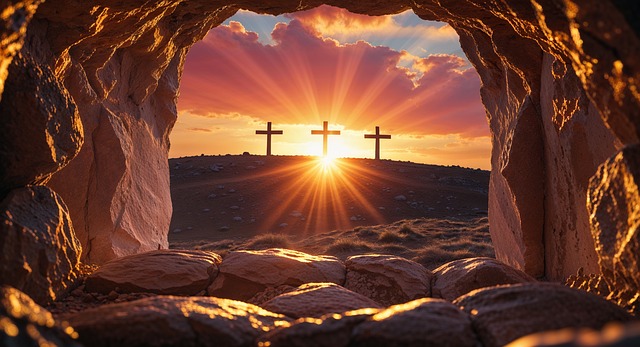
For many Christians, the Gospel can be summarized in one sentence: Jesus died for our sins so that we can go to heaven when we die. This statement contains precious truth. Jesus did die for our sins, and those who belong to him will indeed be with him beyond death. Yet, as important as these truths are, the Gospel is bigger than going to heaven.
The biblical Gospel is not merely an evacuation plan for departing souls. The Gospel announces that God has acted decisively through Jesus Christ to rescue sinners, defeat evil, establish his Kingdom, and renew his creation. Rather than merely preparing us for life after death, this good news brings us under the saving reign of Jesus. Through that reign, Christ begins transforming our lives here and now.
The Gospel is personal, but it is not private. It concerns the forgiveness of our sins, but it also concerns the lordship of Christ over all things. It promises heaven, but it moves toward resurrection and new creation.
The Gospel Is an Announcement About Jesus
We often speak of the Gospel primarily as an invitation: “Accept Jesus so that you can go to heaven.” The Gospel certainly includes an invitation to repent and believe, but before it is an invitation, it is an announcement.
Jesus came into Galilee “proclaiming the gospel of God” and declaring that the Kingdom of God had drawn near (Mark 1:14–15). His message was not merely that people could receive a better destination after death. He announced that God’s promised reign was breaking into history through him.
The Gospel announces that Jesus is the promised King. He lived in faithfulness to the Father, died for our sins, was raised bodily from the dead, and has been exalted as Lord. God has begun fulfilling his promises to Israel and his saving purposes for the world through Jesus.
Paul’s summary of the Gospel in 1 Corinthians 15 centers on these historical events: Christ died for our sins, was buried, rose again, and appeared to his followers. Similarly, Romans 1:1–4 describes the Gospel as the good news concerning God’s Son, the descendant of David who was powerfully revealed through his resurrection.
Therefore, the Gospel does not begin with us. It begins with something God has accomplished in Christ.
The first question of the Gospel is not simply, “Where will I go when I die?” The deeper question is, “Who is Jesus?” The apostolic answer is clear: Jesus Christ has risen from the dead and reigns as Lord.
The Gospel Addresses More Than Our Final Destination
Sin has certainly made us guilty before God, but guilt is not the only damage sin has caused.
Sin corrupts our desires, distorts our identities, enslaves our wills, fractures our relationships, produces injustice, and brings death into human experience. It alienates humanity from God, from one another, from creation, and even from ourselves.
Because the problem is so extensive, God’s salvation is correspondingly comprehensive.
Through Christ, we are forgiven and justified. We are also reconciled to God, adopted into his family, liberated from the dominion of sin, indwelt by the Holy Spirit, and progressively transformed into the likeness of Christ.
Salvation changes our standing before God, but it also begins changing the kind of people we are becoming.
Paul writes that if anyone is in Christ, there is new creation (2 Corinthians 5:17). This means that salvation is not merely a legal transaction that guarantees entrance into heaven. It is also the beginning of God’s renewing work within us.
The Gospel does not simply promise that we will live somewhere else one day. It gives us new life in Christ today.
The Cross Is About Forgiveness—and Victory
At the center of the Gospel stands the cross. Jesus bore our sins, suffered in our place, and gave himself to reconcile us to God. Any account of the Gospel that neglects the atoning death of Christ ceases to be the apostolic Gospel.
Yet the cross accomplishes even more than the forgiveness of individual sinners.
At the cross, Jesus exposed and defeated the powers of sin and evil. He broke the claim of the accuser, disarmed the powers, and inaugurated the liberation of those who had lived under the fear of death. Through an instrument of shame and imperial violence, God revealed the true character of his Kingdom: self-giving love, enemy-forgiving grace, and victory through sacrificial faithfulness.
We do not honor the cross by making its achievement smaller. Christ died to forgive sinners, but his death also belongs to God’s larger purpose of reconciling all things to himself (Colossians 1:19–20).
The cross is therefore both personal and cosmic. It reaches the guilty conscience, but its significance extends to the whole creation.
The Resurrection Enlarges the Gospel
If the Gospel were concerned only with the soul going to heaven, the bodily resurrection of Jesus might seem unnecessary. God could simply have allowed Jesus’ soul to ascend into heaven after his death.
But that is not what happened.
God raised Jesus bodily from the grave.
The resurrection demonstrates that God has not abandoned the material world. The body matters. Creation matters. What God made in the beginning is still the object of his love and redemptive purpose.
Jesus’ resurrection is not merely proof that there is life after death. It is the beginning of the new creation within the old one. In the risen Christ, the future God has promised has already entered the present.
Paul calls Christ “the firstfruits” of those who will be raised (1 Corinthians 15:20). Firstfruits are not an isolated event. They are the beginning and guarantee of a greater harvest. Because Jesus has been raised, those who belong to him will also be raised.
The ultimate Christian hope is therefore not merely the immortality of the soul. It is the resurrection of the body and the restoration of God’s creation.
Heaven Is Real, but It Is Not the End of the Story
Scripture gives believers genuine assurance that death cannot separate them from Christ. Paul desired to depart and be with Christ, which he described as better by far (Philippians 1:21–23). We need not be afraid to speak of heaven or the believer’s presence with Christ after death.
Nevertheless, being with Christ immediately after death is not the final chapter of the biblical story.
The New Testament directs our ultimate hope toward the return of Christ, the resurrection of the dead, the final defeat of evil, and the renewal of creation. Romans 8 portrays creation itself groaning as it waits to be liberated from decay. First Corinthians 15 looks forward to death being swallowed up in victory. Revelation 21 presents a new heaven and a new earth in which God dwells with humanity.
Significantly, the holy city comes down from heaven. The biblical story does not end with redeemed humanity permanently escaping from earth. It ends with heaven and earth being brought together under the renewing presence of God.
The final promise is not, “Behold, I am abandoning all things.” It is, “Behold, I am making all things new” (Revelation 21:5).
Christian hope is not the disposal of creation but its redemption.
The Gospel Brings the Future Into the Present
The Kingdom of God has already entered history through Jesus, but it has not yet appeared in its fullness.
God has already raised Christ, but believers still await their own resurrection. Christ has already defeated sin, but we continue to struggle against its presence. Christ has decisively broken Satan’s power, but evil continues to operate.
New creation has begun, but the world still groans under suffering and decay.
This is the tension between the “already” and the “not yet.”
Because the Kingdom has already come, Christians should expect the Gospel to transform lives in the present. Because the Kingdom has not yet come in its fullness, Christians should remain humble, patient, and hopeful amid suffering.
We do not claim that we can create the Kingdom through human effort. Neither do we behave as though nothing matters until we leave this world.
We pray that God will bring his Kingdom and accomplish his will “on earth as it is in heaven” (Matthew 6:10).
Then, empowered by the Spirit, we seek to live as signs of that coming reality.
The Gospel Creates a New People
A Gospel reduced to going to heaven can easily become individualistic. We may then view it entirely through the lens of our own sin, decision, salvation, and future.
Biblical salvation is deeply personal, but God does not save us into isolation. He brings us into a people.
Through the cross, Christ reconciles people to God and to one another. Ephesians 2 describes how Christ makes Jews and Gentiles, whose hostility once divided them, into one new humanity. God calls the Church to embody this reconciliation before the watching world.
The Gospel creates a family whose members learn to forgive, bear one another’s burdens, welcome strangers, care for the poor, share their resources, and love across the boundaries that ordinarily divide human beings.
The Church does not replace the Kingdom of God. However, God calls the Church to serve as a sign, instrument, and foretaste of that Kingdom.
A congregation proclaiming reconciliation while preserving hostility, pride, injustice, or social exclusion contradicts the message it announces. The truth of the Gospel must become visible in the common life of God’s people.
The Gospel Gives Meaning to Life Now
If the purpose of salvation were simply to leave earth for heaven, our present lives could appear spiritually unimportant. Work, culture, relationships, justice, creation care, and service to our neighbors might become secondary concerns.
But if Jesus is Lord and God intends to renew creation, then faithful life in the present matters.
Because of the Gospel, we care for the poor—not because charitable work can replace conversion, but because our King identifies with the vulnerable. We pursue justice—not because we imagine that human institutions can create the new creation, but because injustice contradicts God’s righteous rule.
We practice reconciliation because God has reconciled us to himself. Since the earth belongs to God and he intends to renew it, we care for creation. Because Christ took on flesh and God raised him bodily from the dead, we value the human body.
. We approach our work as service because every sphere of life belongs to Jesus.
These acts do not earn salvation. They are the fruit of salvation.
Good works are not an alternative to the Gospel. When they flow from faith in Christ and remain joined to the proclamation of Christ, they become signs of the new world God is bringing.
The Gospel Is Personal but Never Merely Private
To say that the Gospel is bigger than going to heaven does not mean that personal conversion is unnecessary. Nor should we equate the Gospel with social reform, political activism, or environmental concern.
No improvement in society can reconcile the human heart to God. We still need repentance, forgiveness, new birth, and faith in Jesus Christ.
Each person must respond to the Gospel. We must turn from sin, trust in Christ, receive the Holy Spirit, and learn to follow Jesus.
But when we come to Christ, he does not leave our relationships, possessions, ambitions, habits, and public responsibilities untouched. To confess that Jesus is Lord is to acknowledge his authority over the whole of life.
The Gospel is intensely personal because God calls each of us by name. It is never merely private because the One who saves us is Lord of all creation.
A Bigger Gospel and a Better Hope
The Gospel is bigger than going to heaven because God’s saving purpose is bigger than changing our location after death.
The Gospel announces that Jesus Christ died for our sins, rose from the dead, and now reigns as Lord.
Through him, God forgives sinners, defeats the powers of evil, pours out the Holy Spirit, creates a reconciled people, and begins the renewal of creation.
Those who trust in Christ can face death with confidence because they will be with the Lord. Yet their final hope reaches beyond the intermediate state. They await the return of Christ, the resurrection of the body, the judgment and defeat of evil, and life with God in a renewed creation.
The Gospel does not promise less than heaven. It promises more.
It gives us forgiveness for the past, new life in the present, hope beyond death, resurrection for the body, reconciliation for God’s people, and renewal for creation.
This is the good news: Jesus Christ is Lord, death has been defeated, new creation has begun, and one day God will make all things new.
Frequently Asked Questions
Explore what Scripture teaches about the Gospel, heaven, resurrection, and God’s promise of new creation.
Does the Gospel teach that Christians go to heaven?
Yes. Scripture teaches that believers who die are with Christ. However, the final Christian hope is larger: Christ will return, God will raise the dead, and he will renew creation.
What is the main message of the Gospel?
The Gospel announces that Jesus Christ died for our sins, rose from the dead, and now reigns as Lord. God calls everyone to repent, believe in Christ, and enter the life of his Kingdom.
What is the difference between heaven and the new creation?
Heaven describes God’s realm and the believer’s presence with Christ after death. New creation describes God’s final renewal of heaven and earth, including the bodily resurrection of his people.
Does emphasizing new creation minimize personal salvation?
No. New creation includes personal forgiveness, reconciliation, and transformation while placing them within God’s larger purpose to unite and renew all things in Christ.
Further Reading
- Beale, G. K. A New Testament Biblical Theology: The Unfolding of the Old Testament in the New. Grand Rapids: Baker Academic, 2011.
- Brannon, M. Jeff. The Hope of Life After Death: A Biblical Theology of Resurrection. Downers Grove, IL: IVP Academic, 2022.
- Dempster, Stephen G. The Return of the Kingdom: A Biblical Theology of God’s Reign. Downers Grove, IL: IVP Academic, 2024.
- Ladd, George Eldon. The Presence of the Future: The Eschatology of Biblical Realism. Grand Rapids: Eerdmans, 1974.
- McKnight, Scot. The King Jesus Gospel: The Original Good News Revisited. Grand Rapids: Zondervan, 2016.
- Middleton, J. Richard. A New Heaven and a New Earth: Reclaiming Biblical Eschatology. Grand Rapids: Baker Academic, 2014.
- Rutledge, Fleming. The Crucifixion: Understanding the Death of Jesus Christ. Grand Rapids: Eerdmans, 2015.
- Wright, N. T. Surprised by Hope: Rethinking Heaven, the Resurrection, and the Mission of the Church. New York: HarperOne, 2008.
Leave a Reply