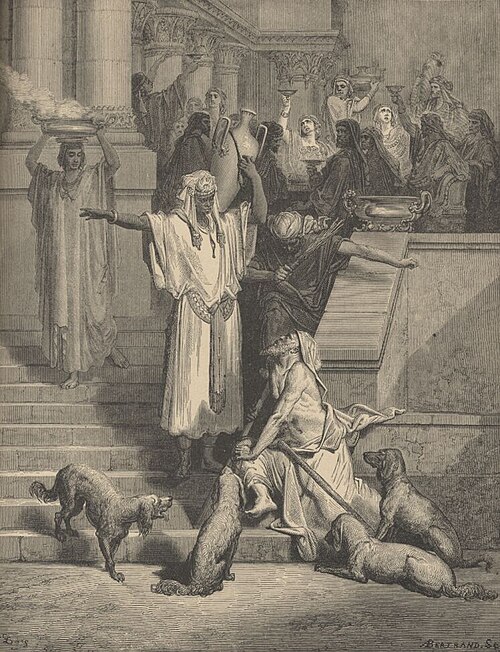
The Rich Man and Lazarus Revisited
There is something deeply troubling about public officials displaying extravagant lifestyles while ordinary citizens struggle to make ends meet. The modest living of public officials is not merely a matter of personal preference in the Philippines. It is a constitutional expectation rooted in the principle that public office is a public trust. Yet we continue to see families struggling to afford food, medicine, and other basic necessities, while some who occupy positions of public responsibility appear remarkably comfortable displaying their wealth before the people they are supposed to serve.
The issue is not simply that some people are wealthy while others are poor. Nor should we assume that every expensive possession is evidence of corruption. The deeper question concerns the moral responsibility that accompanies privilege, particularly when that privilege is associated with public office.
Interestingly, the Philippine Constitution itself addresses this concern. Article XI, Section 1 declares that public office is a public trust and requires public officials to lead modest lives. Republic Act No. 6713 goes further, directing public officials and employees, together with their families, to avoid extravagant or ostentatious displays of wealth.
These provisions recognize something important about public service. Authority is entrusted for the welfare of others, not for the personal glorification of those who exercise it.
This brings to mind one of Jesus’ most disturbing stories: the Rich Man and Lazarus in Luke 16:19–31.
The Rich Man Had a Gate, but He Could Not See Lazarus
Jesus describes a wealthy man who dressed in purple and fine linen and enjoyed luxurious meals every day. At his gate lay a poor man named Lazarus, covered with sores and longing for something to eat.
The contrast could hardly be sharper. Inside the gate were abundance, comfort, and security. Outside lay a suffering human being whose needs remained unmet.
What makes the story particularly unsettling is that Jesus never tells us the rich man had stolen his wealth. Nor does He accuse him of acquiring it through dishonest business dealings. The narrative does not identify the source of his riches.
Instead, Jesus draws our attention to the contrast between the man’s lavish lifestyle and the desperate condition of Lazarus.
The rich man had enough to live extravagantly, yet the suffering at his doorstep apparently made no meaningful difference to his life.
His gate had become more than a physical boundary. It represented the distance between his comfortable existence and the misery he had learned to overlook.
We should be careful not to conclude that Jesus condemned the man merely because he was wealthy. Abraham, who appears later in the story, was himself a man of considerable possessions. The biblical problem is not wealth as such, but the moral blindness that wealth can encourage when it becomes detached from responsibility toward others.
The story challenges us to consider what happens when people become so accustomed to their privileges that the suffering around them no longer troubles their conscience.
The Modest Living of Public Officials: A Constitutional Duty
The Philippine Constitution’s requirement of modest living reflects a similar moral concern, although it operates within a different framework.
Public officials hold positions of authority because the people have entrusted them with responsibilities. Their offices carry influence, access to resources, and opportunities that ordinary citizens may never possess.
Such privileges are meant to serve the public good.
Yet there is always a temptation to confuse being entrusted with authority with being entitled to special treatment. Public service can gradually become a pathway to prestige, personal comfort, and the enjoyment of privileges that separate officials from the everyday difficulties of the people.
A lavish lifestyle does not automatically establish criminal wrongdoing. Some public officials may possess legitimately acquired wealth, and any allegation of corruption must be examined through evidence and due process.
Nevertheless, legality does not exhaust the question of moral responsibility.
A public official may possess resources lawfully and still exercise poor judgment by displaying excessive luxury in a society where many people cannot afford basic necessities.
This is precisely why the constitutional expectation of modest living deserves serious attention. It reminds those in government that public office carries responsibilities extending beyond the avoidance of criminal conduct.
The issue is not whether public servants must live in poverty. It is whether their manner of life reflects an awareness of the people whose welfare they are entrusted to protect.
When public office becomes an occasion for displaying personal wealth, we risk forgetting the distinction between serving the people and being served by them.
The Prophets Had Something to Say About This
The biblical prophets repeatedly confronted societies in which wealth and power had become disconnected from justice.
Amos condemned those who enjoyed luxurious comfort while remaining indifferent to the suffering and moral collapse around them (Amos 6:4–6). His criticism was not directed against comfort in isolation, but against complacency and the failure to respond to injustice.
Isaiah likewise challenged leaders who neglected justice, exploited the vulnerable, and failed to defend those without influence (Isaiah 1:17, 23).
These prophetic warnings reveal something important about God’s concern for human society. Righteousness cannot be reduced to private religious observance while injustice continues unchecked.
In Amos 5:24, the prophet calls for justice to roll like a river and righteousness like an ever-flowing stream.
The imagery is striking because it demands something sustained and unmistakable. Justice should not appear occasionally as a public performance. It should characterize the ordinary conduct of those who claim to honor God.
This is particularly relevant when religious language becomes part of political life. Public professions of faith, attendance at worship services, and appeals to divine blessing cannot substitute for integrity, accountability, and genuine concern for the vulnerable.
The prophets would not have been impressed by religious displays that concealed indifference toward suffering.
Neither should we be.
Jesus Redefines What It Means to Be Great
The New Testament offers an even more demanding understanding of leadership.
In Mark 10:42–45, Jesus observes that rulers of the nations exercise authority by dominating others. He then tells His disciples that greatness among them must take a different form.
Whoever wishes to become great must become a servant.
Jesus grounds this teaching in His own mission. The Son of Man came not to be served but to serve and give His life as a ransom for many.
Here we encounter a profound reversal of conventional ideas about power.
The One Christians confess as Lord does not demonstrate His greatness through extravagant possessions, public admiration, or the privileges of office. He reveals the character of divine authority through self-giving love.
This does not mean that every Christian leader, whether in government or the Church, must abandon material security. It means that authority must be understood as a responsibility entrusted for the good of others.
The same principle challenges religious leaders who treat ministry as an entitlement to luxury while ordinary believers carry the financial burden of sustaining their institutions.
The gospel does not permit us to condemn extravagance in government while excusing the same attitudes within the Church.
Christian leadership, wherever it is exercised, must remain accountable to the character of Jesus Christ.
The Most Disturbing Part of the Story
Perhaps the most troubling feature of the Rich Man and Lazarus is found near the conclusion.
After death reverses their circumstances, the rich man asks Abraham to send someone to warn his brothers.
Abraham responds that they already have Moses and the Prophets. When the rich man insists that someone returning from the dead would surely convince them, Abraham replies that those unwilling to listen to Moses and the Prophets will not be persuaded even if someone rises from the dead.
The warning is profound.
The rich man’s brothers did not lack religious instruction. They already possessed the Scriptures that called God’s people to practice justice and mercy.
Their problem was not the absence of revelation but their failure to heed what had already been revealed.
We might recognize a similar problem in public life.
The Philippines does not lack constitutional principles concerning integrity, accountability, and modest living. These expectations are written into the nation’s fundamental law and its standards governing public service.
Yet principles written on paper do not automatically transform the conduct of those who hold power.
A constitution can establish standards of accountability, but it cannot by itself produce a conscience willing to honor them.
For Christians, the warning reaches further. We can read the Bible, profess our faith, and participate in religious activities while remaining remarkably indifferent to the suffering of people around us.
The question is not merely whether we know what Scripture teaches. It is whether we are willing to allow its moral demands to shape our lives.
The Gate Still Stands Before Us
The Rich Man and Lazarus should not be reduced to a political illustration. Jesus’ story speaks to everyone who possesses resources, influence, or opportunities to help others.
The wealthy are not its only intended audience, and public officials are certainly not the only people who need to hear its warning.
Nevertheless, those entrusted with public authority carry particular obligations because their decisions affect the lives of countless people.
Public service should never become an opportunity to elevate oneself above the difficulties of ordinary citizens. It should deepen one’s responsibility to understand and address those difficulties.
The constitutional demand for modest living and the gospel’s call to justice are not identical. One establishes an ethical standard for public officials within a democratic society. The other reveals the moral demands of God’s kingdom upon those who hear and follow Jesus.
Yet both challenge the assumption that privilege exists primarily for personal enjoyment.
The deeper Christian conviction is that whatever we possess ultimately belongs to God. Wealth, knowledge, opportunity, and authority are gifts that carry responsibilities toward others.
This does not mean we earn God’s favor through generosity or public service. God’s grace precedes our response. But grace should form people who recognize that their blessings are not intended to terminate in private privilege.
The rich man had a gate, but he failed to recognize the suffering immediately beyond it.
We should be careful not to make the same mistake.
For those entrusted with public office, the question is especially urgent. What does it mean to enjoy the privileges of leadership while the people one serves struggle to provide for their families?
And for those of us who profess to follow Jesus, the question is no less demanding. What does our faith amount to if we can speak eloquently about God’s love while remaining indifferent to the Lazarus at our own doorstep?
Perhaps the most sobering lesson of Jesus’ story is that the rich man did not need another miracle to understand his responsibility.
He needed to listen to what God had already said.
The Philippines does not need another constitutional provision to remind its leaders that public office is a public trust. It needs public servants willing to live by that principle.
And the Church does not need another revelation to discover that God cares about justice, mercy, and the vulnerable.
It needs the courage to practice what the Scriptures have already taught us.
For Further Reading
Biblical passages
- Luke 16:19–31 — The Rich Man and Lazarus and the danger of indifference to suffering.
- Amos 6:4–7 — A prophetic warning against luxury accompanied by complacency.
- Isaiah 1:17, 23 — The responsibility to pursue justice and defend the vulnerable.
- Mark 10:42–45 — Jesus’ teaching on leadership as self-giving service.
- Proverbs 30:7–9 — The wisdom of seeking sufficient provision rather than excessive wealth.
Leave a Reply