Wealth, Poverty, and the Christian’s Prayer for Faithfulness
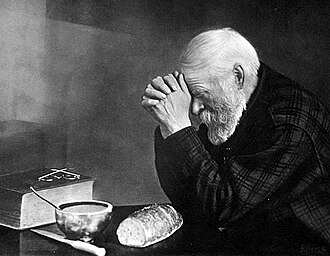
There is a prayer in the Book of Proverbs that rarely finds its way into the vocabulary of prosperity-oriented Christianity. It does not ask for overflowing barns, extraordinary financial breakthroughs, or the accumulation of possessions. Neither does it glorify poverty as though material deprivation were itself a mark of holiness. Instead, it expresses a remarkably sober understanding of the human heart and its vulnerability to both abundance and want.
Agur, the otherwise little-known sage whose words appear in Proverbs 30, asks God for two things before he dies. First, he asks to be kept from falsehood and deceit. Then comes his striking petition: “Grant me neither poverty nor riches; feed me with food convenient for me” (Proverbs 30:8, KJV).
His explanation is equally revealing. He fears that prosperity might lead him to become self-sufficient and deny his dependence upon God. Yet he also fears that extreme poverty might drive him to steal and dishonor God’s name.
Here is a man who understands that faithfulness cannot be measured by the abundance of one’s possessions. He recognizes that both wealth and poverty can expose the human heart to serious temptations. Rather than presuming upon his strength, he asks God to preserve him from circumstances in which those temptations might overwhelm him.
Perhaps this is a prayer that more Christians should learn to pray.
A Prayer for Truth Before a Prayer for Provision
We should notice something important about Agur’s request. His prayer for sufficient provision does not stand alone. It follows his request that God remove falsehood and lying from his life.
The sequence is significant. Before asking about his economic circumstances, Agur expresses concern about truthfulness before God.
He does not merely want enough food. He wants a life free from deception, including the self-deception that wealth can produce and the moral compromises that deprivation may tempt him to make.
The Hebrew expression translated in the King James Version as “food convenient for me” refers to one’s appointed or allotted portion of food. It conveys the idea of sufficient provision rather than luxurious abundance.
Agur is not asking God to guarantee him the comfortable lifestyle of a particular social class. He is asking for what he needs to live faithfully.
This is an important distinction because the biblical idea of contentment can easily be confused with the pursuit of personal comfort. A person may enjoy considerable financial security and still insist that more is necessary. Another may possess relatively little yet experience genuine gratitude and generosity.
Agur understands that the deepest issue is not the precise amount of wealth one possesses but the relationship between material circumstances and fidelity to God.
His prayer is an expression of humility. He does not trust himself to remain unaffected by either extreme. Instead, he entrusts his circumstances to the God whose wisdom he needs.
When Abundance Makes God Seem Unnecessary
Agur’s first concern is that prosperity might lead him to forget God.
This fear echoes Moses’ warning to Israel in Deuteronomy 8. As the people prepare to enter a land of abundance, Moses reminds them that prosperity carries its own spiritual dangers. They may eat until they are satisfied, build comfortable houses, and accumulate possessions, only to forget the Lord who delivered them from slavery.
The problem is not that the promised land is good. Its abundance is part of God’s provision. The danger arises when the gift becomes separated from the Giver.
Prosperity can create the illusion of independence. We begin to imagine that our security rests entirely upon our abilities, investments, savings, and carefully managed circumstances. Gradually, gratitude gives way to entitlement, and dependence upon God becomes little more than a religious expression.
The danger is not always an open denial of God’s existence. Occasionally it appears as practical atheism: we continue to profess faith while organizing our lives as though God and His purposes have little bearing upon our decisions.
Jesus confronts this temptation in the Parable of the Rich Fool (Luke 12:16–21). The man’s land produces abundantly, and he decides to build larger barns to accommodate his harvest. Yet his plans contain no serious consideration of God, his own mortality, or the needs of others.
His failure is not agricultural success. It is the assumption that accumulated possessions can secure his life.
Jesus exposes the tragedy of gaining more than enough while losing sight of what truly matters.
Abraham, the Rich Man, and Lazarus
The Parable of the Rich Man and Lazarus in Luke 16:19–31 brings Agur’s concern into even sharper focus.
The rich man lives in luxury, while Lazarus lies at his gate, covered with sores and longing for food. After both men die, their circumstances change dramatically. Lazarus receives comfort at Abraham’s side, while the rich man experiences anguish.
Some interpretations reduce the story to a warning that rich people go to hell while poor people go to heaven. Yet this conclusion overlooks a remarkable detail: Abraham himself was wealthy.
Genesis 13:2 describes Abraham as possessing abundant livestock, silver, and gold. Nevertheless, Jesus portrays him as the figure who receives Lazarus into comfort.
If wealth automatically condemned a person, Abraham’s presence would create an obvious difficulty.
The distinction, however, is not simply between a wealthy man who behaved badly and another wealthy man who behaved well. The parable confronts something more fundamental about covenant faithfulness.
Lazarus lies at the rich man’s very gate. His suffering is close and accessible. The rich man possesses the means to relieve his misery, yet the narrative records no act of compassion.
It is also worth remembering Abraham’s hospitality in Genesis 18. He welcomes strangers and provides for their needs. Although Luke does not explicitly draw a comparison between that episode and the rich man’s failure, the broader biblical association is suggestive.
Abraham’s wealth did not prevent him from practicing hospitality. The rich man’s abundance, by contrast, coexisted with indifference toward someone directly before him.
The irony becomes greater when the rich man addresses Abraham as his father. Abraham acknowledges him as a child, yet ancestral identity cannot rescue him from judgment.
Here we encounter a theme already present in John the Baptist’s preaching. In Luke 3:8–11, John warns against relying upon descent from Abraham while failing to produce the fruit of repentance. When the crowd asks what repentance requires, he speaks of sharing clothing and food with those who lack them.
Covenant identity must become visible through covenant faithfulness.
The parable reaches its climax when the rich man asks Abraham to send Lazarus to warn his brothers. Abraham responds that they already have Moses and the Prophets.
This is the decisive theological point. God’s people had already received instructions concerning the vulnerable. Deuteronomy 15 commanded generosity toward the poor. The prophets condemned those who combined religious observance with injustice and neglect.
The rich man’s failure was not ignorance of what God required. It was his failure to respond to the revelation that was already available to him.
Nor should we turn the parable into a detailed geographical account of the intermediate state. Its imagery of Hades, Abraham’s side, and the uncrossable chasm serves a narrative of judgment and reversal. The final appeal to Moses and the Prophets directs the warning toward those who are still alive.
The parable does not teach that poverty earns salvation or that charitable donations purchase heaven. It warns that religious identity and material privilege cannot substitute for a life responsive to God’s revelation.
The tragedy is not merely that the rich man possessed much. It is that he could enjoy abundance while remaining unmoved by suffering at his gate.
When Poverty Becomes a Crushing Burden
Agur’s prayer also recognizes another danger: the desperate circumstances produced by deprivation.
He fears that poverty might tempt him to steal and thereby dishonor God’s name. We should be precise here. Agur does not explicitly say that poverty will make him curse God. His concern is that desperation might lead him into conduct that profanes the name of the Lord.
This distinction matters.
Scripture does not portray poverty as sinful, and it suggests that poor people can be as faithful as the wealthy. The Bible repeatedly honors those who remain faithful amid hardship.
Nevertheless, severe deprivation can place extraordinary pressures upon human beings. Hunger, illness, unemployment, indebtedness, and the struggle to provide for one’s family can become overwhelming burdens.
Agur refuses to romanticize such circumstances.
He does not ask God to make him poor so that he might prove his spirituality. He asks for sufficient provision because he understands his own vulnerability.
His prayer should also remind the Church that the poor need more than exhortations to remain faithful. They need compassion, justice, practical assistance, and opportunities to live with dignity.
There is something deeply troubling about preaching contentment to people who cannot obtain adequate food while celebrating wealth as evidence of God’s blessing.
The biblical call to contentment must never become an excuse for neglecting those who lack life’s necessities.
If Agur asks God for sufficient bread, the Church must take seriously the needs of those who have none.
Give Us This Day Our Daily Bread
Agur’s prayer finds a striking resonance in the prayer Jesus teaches His disciples: “Give us this day our daily bread” (Matthew 6:11).
Jesus does not teach His followers to pray for endless accumulation. He teaches them to depend upon the Father for their daily needs.
The plural pronoun is significant. Jesus teaches us to pray for our bread, not merely my bread.
The prayer places our material needs within the shared life of God’s people. Its language invites us to consider the neighbor whose daily bread is still uncertain.
This recalls Israel’s experience of manna in the wilderness. In Exodus 16, God provides food for the people and instructs them to gather what they need. The narrative challenges hoarding and teaches dependence upon God’s provision.
Paul later draws upon this account in 2 Corinthians 8:13–15 when encouraging the Corinthians to assist impoverished believers. His concern is not that some Christians should be impoverished so that others might enjoy relief. He seeks a fair balance in which the resources of one community help meet the needs of another.
The principle is not enforced sameness of possessions. It is mutual responsibility within the covenant family.
God’s gifts are never intended merely to secure private advantage. Those who receive abundance have opportunities to become instruments of generosity toward those in need.
This reflects a larger biblical conviction: God’s blessing creates a moral responsibility.
When God called Abraham, He promised that blessing would reach the families of the earth through him. Election was never intended to terminate in private privilege. It served God’s wider purposes for humanity.
The same principle challenges Christians today. We are not blessed simply so that we may accumulate more. We are entrusted with resources that can become channels of mercy, hospitality, and justice.
Contentment Is Learned, Not Purchased
Paul provides an important complement to Agur’s prayer in Philippians 4:11–13.
He explains that he has learned to be content in different circumstances. He knows both abundance and need, both satisfaction and hunger.
This is not the testimony of someone who has discovered a reliable method for avoiding hardship. Paul experienced deprivation, imprisonment, opposition, and uncertainty.
Nor does he describe contentment as an automatic emotional state that accompanies conversion.
He has learned it.
His confidence rests upon Christ, who strengthens him amid circumstances he cannot always change.
This guards against a mistaken reading of Agur’s prayer. Proverbs 30 petitions for sufficient provision, and does not guarantee that faithful believers will avoid poverty or abundance.
Paul’s experience demonstrates that faithfulness remains possible even when the circumstances we prayed to avoid become our reality.
Likewise, in 1 Timothy 6:6–10, the warning concerns the destructive power of the desire to become rich. The love of money, not money itself, becomes the root of many kinds of evil.
Later in the same chapter, the rich are instructed not to be arrogant or to place their hope in uncertain wealth. Instead, they are to be generous and ready to share (1 Timothy 6:17–19).
The instruction is revealing. Wealthy believers are not told that their possessions automatically exclude them from God’s people. They are told to reconsider the foundations of their security and the responsibilities that accompany their resources.
Christian contentment, therefore, is not passive acceptance of injustice or an excuse for refusing to improve one’s circumstances. It is freedom from allowing possessions—or the absence of possessions—to determine one’s deepest identity and hope.
A contented person can work diligently, plan responsibly, provide for family, and pursue legitimate economic opportunities without making wealth the governing purpose of life.
Contentment does not mean we cease to care about material needs. It means those needs no longer define the ultimate meaning of our existence.
The Cross Reveals the Character of True Riches
The Christian understanding of wealth must finally be brought into conversation with Jesus Christ.
Paul tells the Corinthians that although Christ was rich, He became poor for their sake, so that through His poverty they might become rich (2 Corinthians 8:9).
This is not a promise that every believer will become financially prosperous. Paul employs the language of riches and poverty to describe the extraordinary generosity revealed through Christ’s saving work.
The eternal Son does not exploit His divine status for selfish advantage. In the Incarnation, He fully enters into the vulnerability of human life. His mission culminates in the self-giving love of the cross.
Paul invokes this grace while encouraging the Corinthians to participate generously in providing relief for other believers.
The argument moves from Christology to communal responsibility.
Christ’s generosity becomes the pattern for Christian generosity.
The cross therefore challenges the world’s assumptions about greatness and wealth. In Jesus, we encounter a Lord whose glory shines through self-giving love rather than through the accumulation and protection of privilege.
His resurrection announces that this cruciform love, apparently defeated by the powers of the present age, has been vindicated by God.
The new creation has begun through the risen Messiah, but its fullness is still to come.
The Church is called to anticipate that future through a common life shaped by mercy, justice, reconciliation, and generosity.
We cannot end poverty by making religious statements, and our charitable work cannot bring about God’s completed kingdom. Yet neither may we use the promise of future restoration as an excuse for present indifference.
The resurrection assures us that suffering, deprivation, and death do not possess the final word. Our response to suffering in the present should bear witness to that hope.
When Enough Becomes Something We Share
Agur’s prayer is intensely personal, but its implications cannot remain merely private.
We may pray for sufficient provision while remaining indifferent to those whose needs are unmet. We may thank God for our abundance while overlooking the Lazarus who lies at our gate.
That would miss the larger biblical vision.
The question is not simply whether I have enough. I wonder if I have become so preoccupied with preserving my own security that I no longer recognize the needs of others.
The early Christian communities described in Acts understood that belonging to Christ created responsibilities extending beyond the individual household. Their sharing of resources reflected a fellowship in which material need mattered to the entire community.
This does not mean that every Christian must possess identical resources. It means that generosity belongs to the character of a people formed by grace.
Nor should generosity become an instrument of religious coercion. Giving is not a payment demanded by spiritual authorities in exchange for divine favor. Paul emphasizes willing and cheerful generosity in 2 Corinthians 9:7.
The gospel produces freedom for service, not another system of religious bargaining.
And where suffering arises from exploitation, unjust practices, or the denial of basic opportunities, Christian compassion must be willing to examine those causes. Personal charity is valuable, but it should not become a substitute for justice.
The Church must resist both the prosperity gospel, which can treat abundance as proof of divine favor, and a distorted spirituality of poverty, which can make deprivation appear inherently holy.
Glorifying either extreme does not serve God’s purposes.
The biblical vision is one of faithful dependence, responsible stewardship, and love expressed through concrete action.
Lord, Give Me Enough—and Make Me Generous
Perhaps the wisdom of Agur’s prayer lies in its refusal to presume upon our spiritual strength.
He knows that prosperity can make him forget God. He knows that deprivation can tempt him toward desperate compromises. Rather than trusting his capacity to remain faithful, he asks God for what is sufficient.
But when we read his prayer alongside the teaching of Jesus, another dimension emerges.
We should not ask merely for enough to protect ourselves from hardship. We should also ask for hearts that recognize the needs of others.
After all, the Rich Man and Lazarus reminds us that having enough—or even more than enough—does not guarantee our generosity.
We may possess Scripture and yet fail to obey it. We may claim Abraham as our spiritual father while neglecting the hospitality associated with his faith. We may confess the lordship of Christ while living as though our possessions belong exclusively to ourselves.
The Christian’s prayer must therefore reach beyond material balance.
We may rightly ask God to preserve us from the despair that deprivation can bring and from the pride that prosperity can nurture. But we must also ask Him to form within us the character of Jesus, whose self-giving love reveals the true meaning of greatness.
Perhaps our prayer should be something like this:
Lord, do not allow poverty to drive me into despair, nor prosperity to make me forget You. Provide what I need to live faithfully, teach me to receive Your gifts with gratitude, and never let my comfort blind me to the suffering of my neighbor. When You entrust me with abundance, make me generous; when I experience need, sustain my trust in You. Above all, keep my heart faithful to the One who gave Himself for us.
In the end, the greatest danger lies in balance, not in simply having too much or possessing too little. It is allowing either circumstance to become more important than our relationship with God and our responsibility toward others.
Agur teaches us to pray for enough. Jesus teaches us to recognize the suffering person at our gate. Paul teaches us to discover contentment in Christ and to share generously with those in need.
Together, they point us toward a life in which possessions remain gifts rather than masters, prosperity becomes an opportunity for service, and contentment is grounded in the faithfulness of God.
The blessing is not merely to have enough for ourselves, but to remain faithful to God and generous toward others with whatever He has entrusted to us.
Note
The exposition of Agur’s prayer relies on the distinction between the Hebrew expression for an allotted portion of bread and the idea of excessive abundance. This understanding is supported by traditional Hebrew commentaries and the NET Bible’s translation notes. Cambridge Bible for Schools and Colleges+1
Further Reading
Proverbs 30:7–9, Deuteronomy 8:11–18, Luke 16:19–31, Philippians 4:10–13, and 2 Corinthians 8:9–15
Leave a Reply