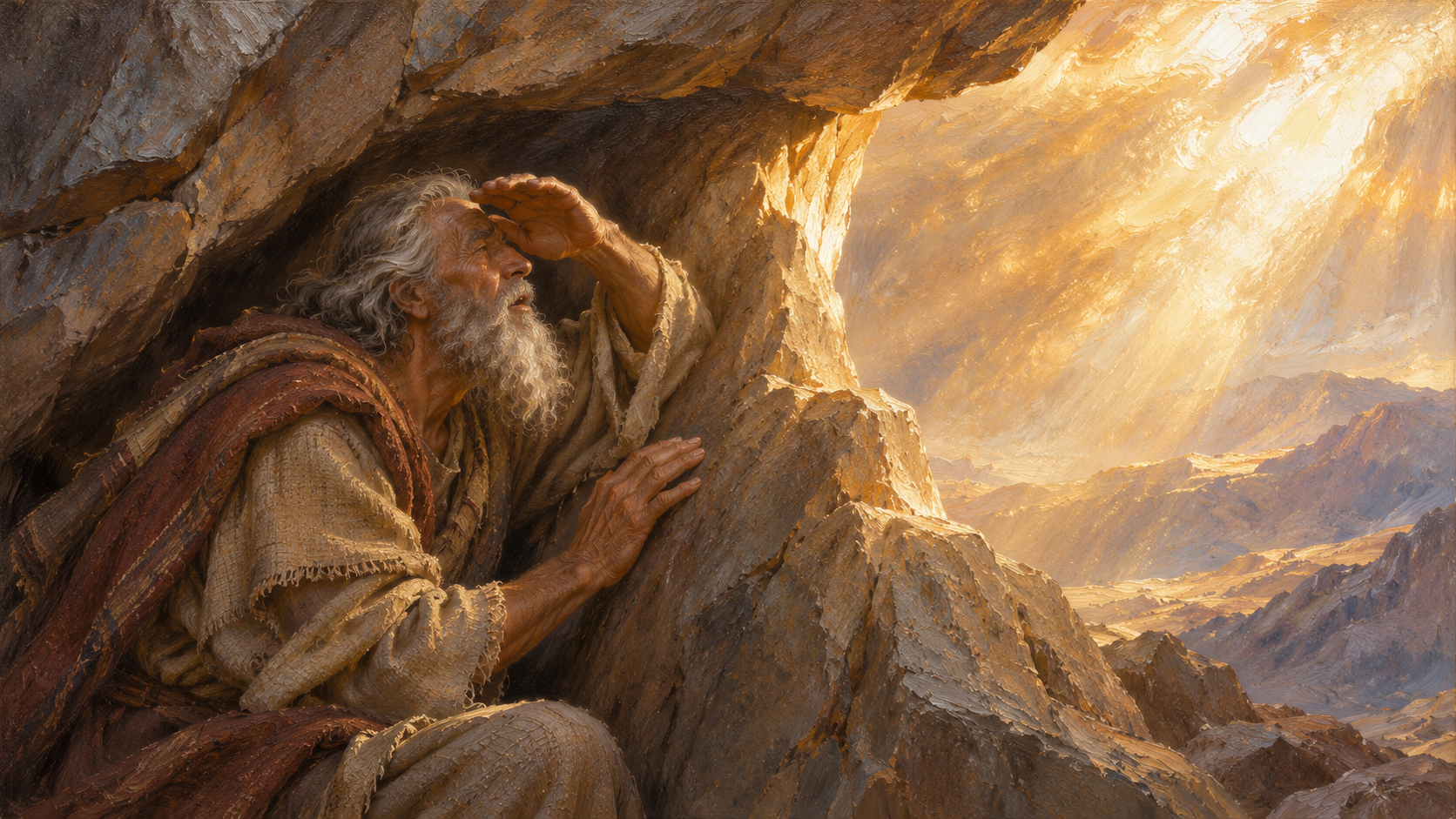
Did Moses see Jesus when the Lord spoke to him “face to face”? Exodus 33 says that God spoke to Moses as one speaks to a friend (v. 11). Yet God also tells Moses that he cannot see his face and live (v. 20). Some Christians explain this by saying that Moses saw the Son before he became flesh. I understand the appeal of that reading. The Son makes the Father known, and we should expect to find him at work in Israel’s story. Even so, Exodus does not identify the appearance as Jesus. We need to distinguish what the passage says from what we infer.
Moses and the Meaning of “Face to Face”
The conversation takes place after Israel worships the golden calf. Moses pleads for the Lord to go with the people. The promised land will mean little if they arrive without God’s presence. What will distinguish Israel from the other peoples, Moses asks, if the Lord does not go with them? It is in this setting that Moses asks to see God’s glory (Exodus 33:15–18).
At the tent of meeting, Exodus says that the Lord speaks face to face. The comparison with a friend tells us how direct and personal that conversation was. Numbers 12:6–8 makes a similar distinction. God speaks to other prophets through dreams and visions, while he speaks to Moses plainly, “mouth to mouth.” The passage also says that Moses beholds the Lord’s form; the ancient Greek translation says he saw the Lord’s glory. Moses had a real encounter with God, both in what he heard and in what God allowed him to see.
Exodus is equally careful about the limits of that sight. The Lord shelters Moses in a cleft in the rock as his glory passes. Moses can see what the story calls God’s “back,” but he cannot see his face (Exodus 33:20–23). We don’t have to decide what a divine back would look like to understand the scene. God can speak to Moses as a friend and still shield him from what he cannot bear to see.
God’s Glory and the Revelation of Jesus
Notice what God promises when Moses asks to see his glory. He will let his goodness pass before Moses and proclaim his name. In the next chapter, the Lord passes by and declares himself merciful and gracious, slow to anger, and faithful. He also takes Israel’s wrongdoing seriously (Exodus 34:5–7). To a people who had just broken the covenant, this mattered more than the details of what Moses saw. They needed to know whether the God they had offended would still go with them.
John’s Gospel brings that same God into view. The eternal Word became flesh and dwelt among us, and in him we have seen glory full of grace and truth. Put those words beside Exodus, where God dwells with Israel and declares his steadfast love and faithfulness. We begin to hear why John speaks of glory as he does. John then says that no one has ever seen God and that the Son has made him known (John 1:14–18). In the life of Jesus, we come to know the Father whose mercy Moses heard proclaimed.
Did Moses See Jesus Before the Incarnation?
There is good reason, then, to read Israel’s story in light of Christ. Paul identifies Christ as the spiritual rock from which Israel drank in the wilderness (1 Corinthians 10:1–4). John connects the glory Isaiah saw with Jesus (John 12:37–41). These passages show how the apostles understood the Son’s place in Israel’s story. They also help us ask a more precise question. The Son’s work of making God known is one thing; identifying him as the one who visibly appeared in a particular scene is another. Neither passage makes that identification for Moses’ encounter in Exodus 33.
This is where the distinction between a theophany and a Christophany helps. A theophany is a manifestation of God’s presence. A Christophany is specifically an appearance of Christ. At Sinai, Israel heard God speak from the fire, and Moses reminds them that they saw no form (Deuteronomy 4:11–15). The fire and the voice made God’s presence known. God gave the people no visible figure to identify. We can confidently call that a theophany, without claiming to know more than the text tells us.
Knowing the Father Through the Son in the Spirit
Jesus’ baptism also helps us see what is at stake. As Jesus comes up from the water, the Spirit descends like a dove, and the Father’s voice calls Jesus his beloved Son (Matthew 3:16–17). The Father makes himself heard in the same scene in which the Son is seen and the Spirit descends. Each is distinct, and together they make the one God known. This is the pattern Paul describes when he says that through Christ we have access to the Father in one Spirit (Ephesians 2:18). The Son’s unique place in revealing the Father gives us a way to speak about their relationship without assigning every divine appearance or voice to the Son.
I am content to say that Moses met the living God and that the Son makes the God of Moses known to us. A Christian may see a Christophany in the scene, but I would hold it as a possible reading rather than build a doctrine on it. What moves me most is what Moses does after the Lord proclaims his name. He bows in worship, then asks God to forgive a stubborn people and go with them (Exodus 34:8–9). Moses has glimpsed glory, and his first concern is that this God will stay with his people. In Christ we can make that prayer our own.
Did this reflection help you understand the passage?
Leave a Reply