Biblical theology
-
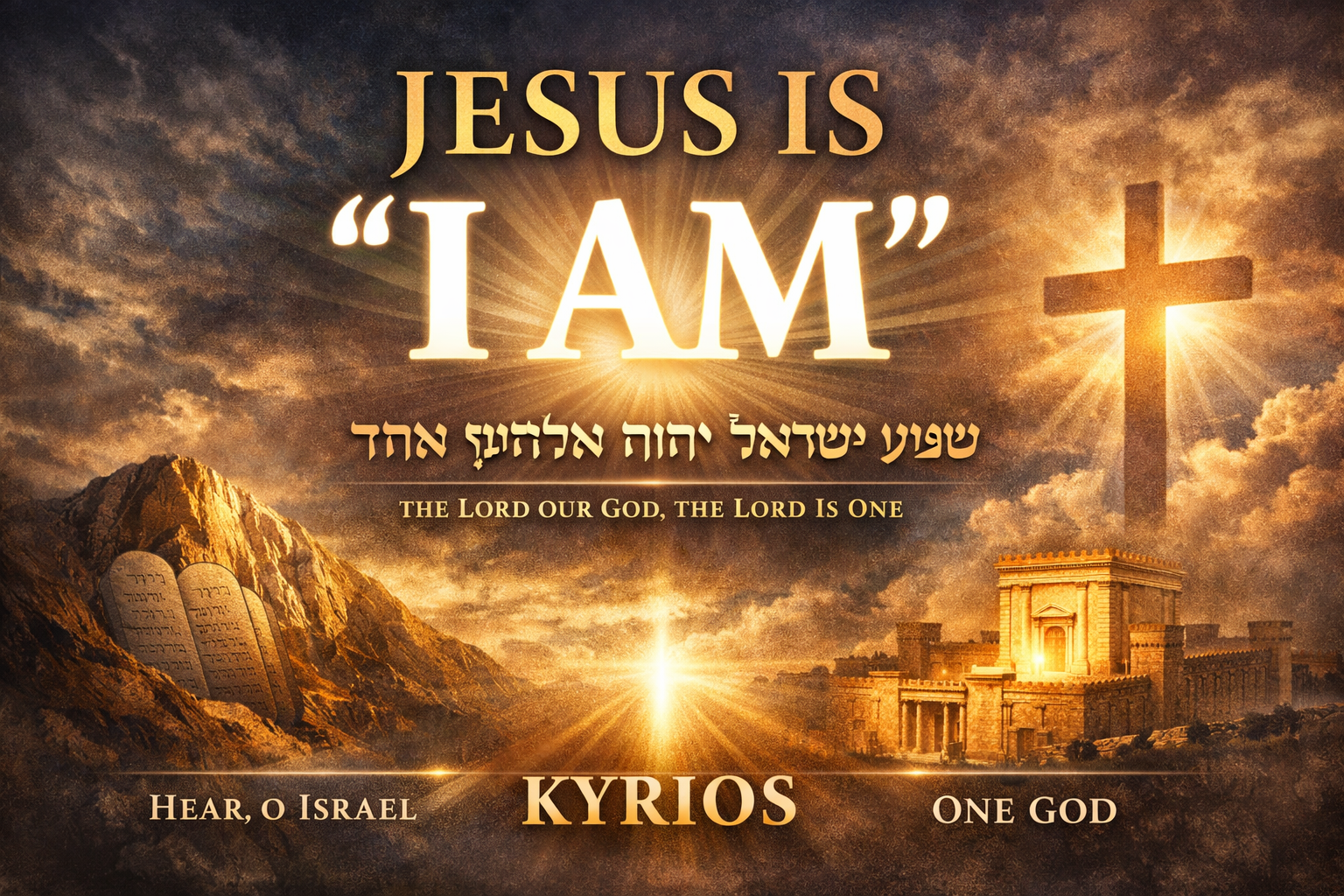
Confessing Jesus as “I AM” did not lead early Christians away from Jewish monotheism—it reshaped it. This post explores how the Shema, kyrios, and Second Temple Jewish thought help us understand how Jesus is included within the divine identity without collapsing Father, Son, and Spirit.
-

Romans 15:14–21 reveals Paul’s astonishing self-understanding: his mission to the Gentiles is a priestly vocation. He presents Spirit-sanctified communities as an offering to God, tracing a gospel arc from Jerusalem to Illyricum. Mission becomes worship, unity becomes infrastructure, and Scripture becomes the compass for the church’s outward calling.
-
Romans 15:7–13 shows the gospel’s true power: Christ fulfills Israel’s story, extends mercy to the nations, and forms a people who glorify God with one voice. Welcome becomes worship as Jews and Gentiles, strong and weak, stand together in the unity the Spirit creates. This is the gospel made visible in community.
-
The article clarifies that Gentile inclusion in God’s plan is not a fallback due to Israel’s failure but an integral part of God’s covenant since the beginning. It emphasizes that through the Messiah, Israel’s mission extends to all nations, illustrating a unified community of faith that fulfills original biblical promises.
-

Israel stumbled over her own Messiah not because she lacked zeal or covenant devotion, but because God fulfilled His promises in a way that overturned long-held expectations. The stone God laid in Zion—fulfilled in the crucified and risen Jesus—did not match the forms Israel assumed God’s faithfulness must take. Paul insists this stumble is neither…
-
Romans 12:9–21 is not a moral checklist but a portrait of a community shaped by God’s covenant mercy. Paul describes how love, humility, generosity, endurance, and non-retaliation emerge when the church learns to live inside mercy without turning it into pride. Christian ethics here is not pressure-driven but mercy-formed.
-
Claims that salvation depends on pronouncing Jesus’ name “correctly” misunderstand Scripture, language, and the gospel itself. The New Testament never treats pronunciation as salvific. Salvation rests on God’s covenant faithfulness revealed in the crucified and risen Messiah—not on phonetic precision. When pronunciation becomes the gatekeeper of heaven, the gospel has already been lost.
-
Pauline theology, covenant, justification, Spirit, new creation, Romans, Galatians, gospel, church identity, holiness, Torah, Israel, ethics, faithfulness, vocation, covenant renewal, biblical theology
-
Ecclesiastes groans with honesty. Paul groans with hope. Resurrection doesn’t erase the ache—it gives it direction. The future isn’t vanity; it’s new creation.