New Creation
-

Many Christians imagine heaven as a distant place we go to when we die. But the Bible’s vision is larger and richer than that. The final Christian hope is not escape from creation, but resurrection, new creation, and God dwelling with humanity in a world made whole.
-
In Colossians 3:5–11, Paul moves from theology to practice. Because believers have died and been raised with Christ, they must put to death the habits of the old humanity and live as the new creation in Him.
-

Resurrection and new creation belong together. The Bible does not give a technical map of how God will renew the world, but it gives us a pattern: the resurrection of Jesus. His risen body shows that God’s future is not the disposal of creation, but its transformation, healing, and final renewal.
-

Paul says believers have died with Christ to the world’s systems. That means the church must not go back to living by fear, control, human rules, and outward religious performance. Colossians 2:20–23 reminds us that Christ did not free His people only to place them under another system that cannot change the heart.
-

Where can true safety be found in a fallen world? Not in wealth, power, or control, but in Christ, whose death and resurrection hold God’s people secure even in the midst of chaos.
-

In a world shaken by war and fear, Colossians 1:15–20 calls Christians back to the crucified and risen Christ, in whom all things hold together. This essay explores how Christ’s cosmic lordship and cross-shaped peace ground the church’s calling to truthful, costly peacemaking.
-
In Colossians, Paul isn’t battling atheism but a seductive “Jesus-plus” spirituality—rules, calendars, ascetic discipline, and even angel-focused mysticism—offered as the pathway to “fullness.” Paul’s urgent claim is that believers don’t graduate beyond Christ: the fullness of God dwells in him, and in him the church is already complete. The letter calls Christians to resist fear-driven…
-
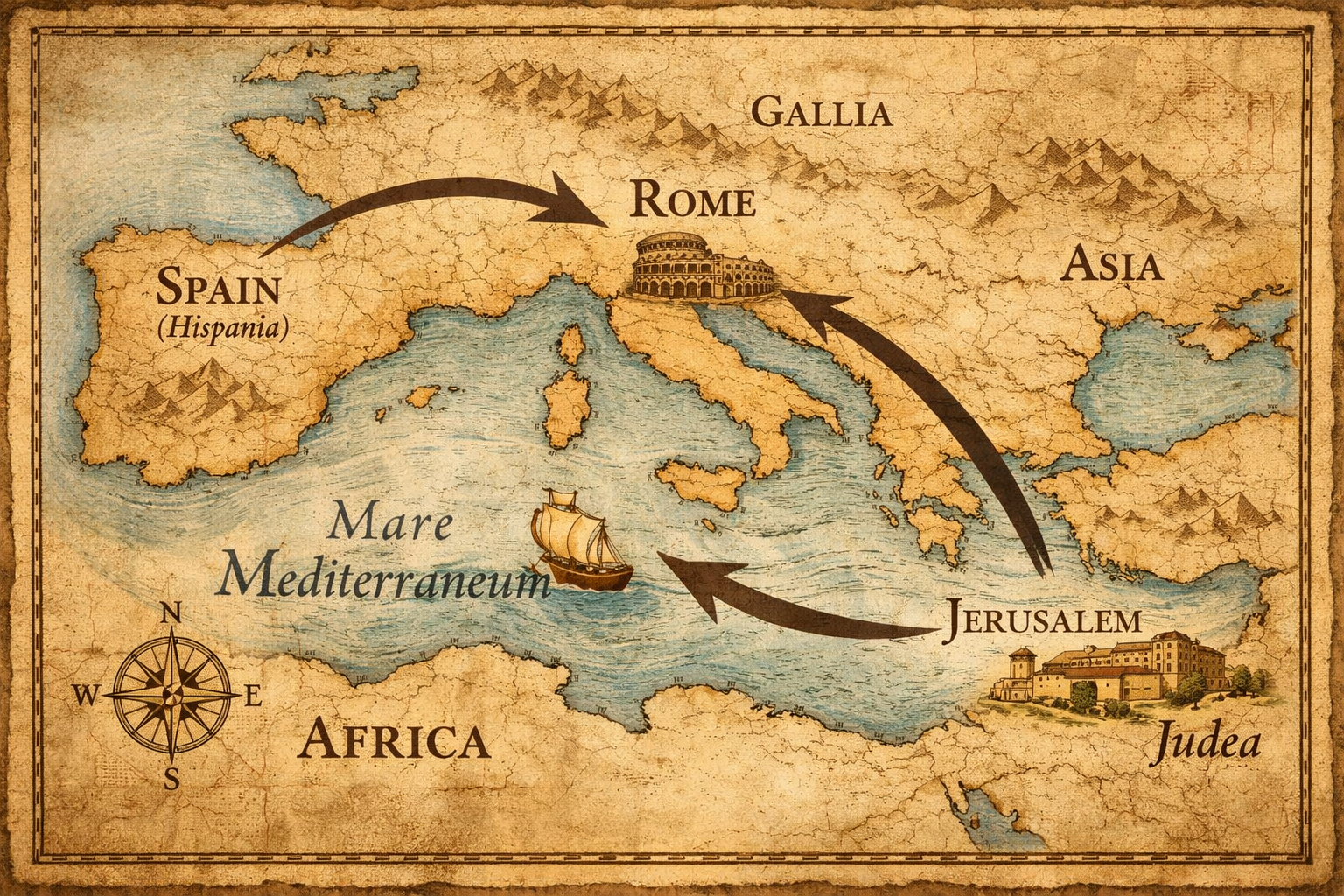
Paul’s travel plans in Romans 15 aren’t just logistics—they’re theology in motion. A gospel disrupting comfort, forging unity, and pushing the church toward new horizons. What happens when God interrupts our plans to advance His? Romans 15:22–33 shows us.
-
Ecclesiastes groans with honesty. Paul groans with hope. Resurrection doesn’t erase the ache—it gives it direction. The future isn’t vanity; it’s new creation.
-
Christian ethics isn’t driven by fear or pressure. It flows from adoption. We live holy lives not to earn God’s favor—but because we already belong to His family.