Biblical theology
-

The seven-dispensation scheme may look orderly, but it can divide what the gospel holds together. Scripture tells one covenant story centered on Jesus Christ, Israel’s Messiah and the world’s true Lord.
-

God’s eternal purpose in Christ reaches back before creation and moves forward toward the renewal of all things. The gospel is not God’s emergency repair plan. It is his ancient purpose unveiled in Jesus.
-

The Trinity is not a mathematical puzzle or a competition within God. It is the Christian confession that the one God of Israel has made himself known as Father, Son, and Spirit.
-

Many Christians imagine heaven as a distant place we go to when we die. But the Bible’s vision is larger and richer than that. The final Christian hope is not escape from creation, but resurrection, new creation, and God dwelling with humanity in a world made whole.
-

Many Christians read Revelation 7 as though it divides the redeemed into separate prophetic groups. But what if John is doing something deeper? What if the 144,000 and the great multitude are not rivals in God’s plan, but two angles on the one people of God gathered by the Lamb?
-
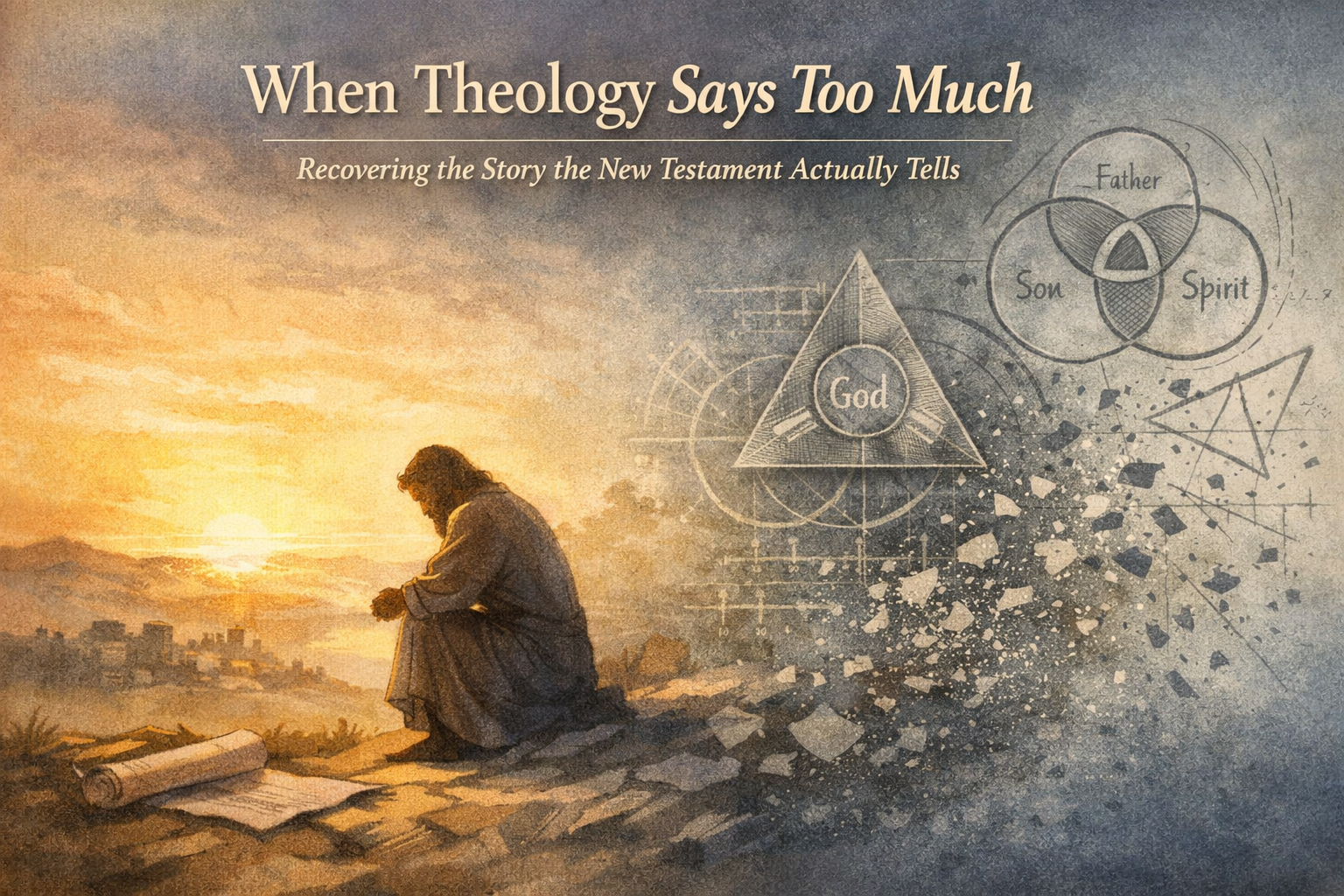
Modern theology often tries to explain Jesus with categories the New Testament never uses. Yet Scripture roots his identity in Israel’s story, not abstract metaphysics. His prayer, obedience, and Spirit-anointed mission reveal the true shape of Sonship—and invite us to recover a Christology grounded in narrative, not speculation.
-

Israel stumbled over her own Messiah not because she lacked zeal or covenant devotion, but because God fulfilled His promises in a way that overturned long-held expectations. The stone God laid in Zion—fulfilled in the crucified and risen Jesus—did not match the forms Israel assumed God’s faithfulness must take. Paul insists this stumble is neither…
-
Romans 10 warns that zeal, Scripture, and moral passion can still miss the story of God when righteousness becomes something we defend rather than something God reveals. Paul’s diagnosis of Israel becomes a mirror for modern Christian legalism and identity politics. The question is not our sincerity but our willingness to submit to God’s righteousness.